
As a small business owner, you value both flexibility and peace of mind. By launching a limited liability company (LLC), you gain both: the freedom to manage and scale your business as you see fit, but also, protection for your personal assets.
Liability protection only goes so far, however. This should not be confused with insurance protection; liability protection simply means that, in the event of a lawsuit or debt claim, your personal assets generally remain protected. Insurance expands this protection to cover common sources of risk: unexpected issues such as property damage or business errors, for example.
There’s a lot to consider, and it may take some serious research before you can fully answer: Do I need business insurance if I have an LLC? This ultimately comes down to business-specific risks and industry requirements.
What an LLC protects
The core function of an LLC is to separate personal and business assets. Other benefits (such as increased credibility) can accompany this business structure, but the desire for liability protection is often at the heart of this effort.
With LLC status comes baseline protection from personal liability. This means that the LLC is responsible for debts or claims, not the individual owner. This is an important distinction, because it means that business obligations are linked to the LLC, and therefore, less likely to place your personal assets at risk.
The protection conferred by LLC status, although certainly valuable, does not cover every risk or potential loss. It is not, for example, a sufficient safeguard against physical damage to business property. This protection could also fall short amid claims of professional errors or misconduct. Additional safeguards such as business insurance provide broader coverage, and ultimately, peace of mind.
Do you need business insurance if you have an LLC?
Business insurance is not legally required for every LLC, but it is often advisable. The main requirements for forming an LLC include:
- Submitting articles of organization
- Designating a registered agent to receive service of process
- Paying required fees
- Following ongoing requirements such as submitting annual reports
- If relevant, obtaining business permits or licenses
So, do you need business insurance for an LLC? Technically, no: it is not outright required to legally start a business or grow operations. It’s not even needed to form an LLC. Its necessity (or lack thereof) ultimately depends on business circumstances such as:
- Hiring employees. Across all business structures (not just LLC), workers’ compensation coverage is generally required upon hiring employees.
- Working in licensed professions. Some regulated industries mandate professional liability insurance as part of licensure or to practice.
- Meeting targeted industry standards. In some sectors, additional insurance (beyond professional liability coverage) may be needed to bid on contracts or even to operate.
Different LLCs may or may not require insurance depending on industry-specific concerns or the need to hire employees. Even when insurance is not outright required, however, it’s strongly recommended: this can provide valuable protection or even increased credibility.
Does a single-member LLC need insurance?
Don’t assume that a smaller or scaled-back organization requires less protection simply because it’s run by one person. Remember: a single-member LLC generally faces the same risks as its multi-member counterpart. Issues such as property damage and client disputes are still fully possible, no matter the size of the business.
If anything, single-member LLCs are even more in need of insurance because there are no partners available to help absorb financial losses. Insurance could provide a buffer that most single-member LLCs otherwise lack. What’s more, insurance could expand liability protection. Yes, the structure itself is meant to separate personal and business assets, but, with single-member LLCs, this effort can be complicated by a few potential challenges:
- Mixing personal and business finances. LLC owners are strongly advised to separate personal and business funds, but what if these are inadvertently commingled? The court might then determine that the LLC is not truly separate. Personal assets could be exposed even with insurance coverage, but if the claim is covered, the LLC owner might not need to pay out of pocket.
- Personal guarantees. Personal guarantees expand business opportunities by improving client or lender confidence. These guarantees can be risky, however: owners agree to become personally liable for loans or contracts in the event their LLC cannot meet financial obligations. This arrangement bypasses liability shields, but again, in the worst-case scenario, insurance limits the likelihood of paying out of pocket from personal funds.
- Negligence or legal violations. LLC status does not protect business owners against their own actions, should those actions be deemed wrongful or negligent. Protection against business liability does not equate to protection against misconduct. Specific types of insurance address this, however, and help cover potentially significant defense costs or even settlements.
What does LLC insurance cover?
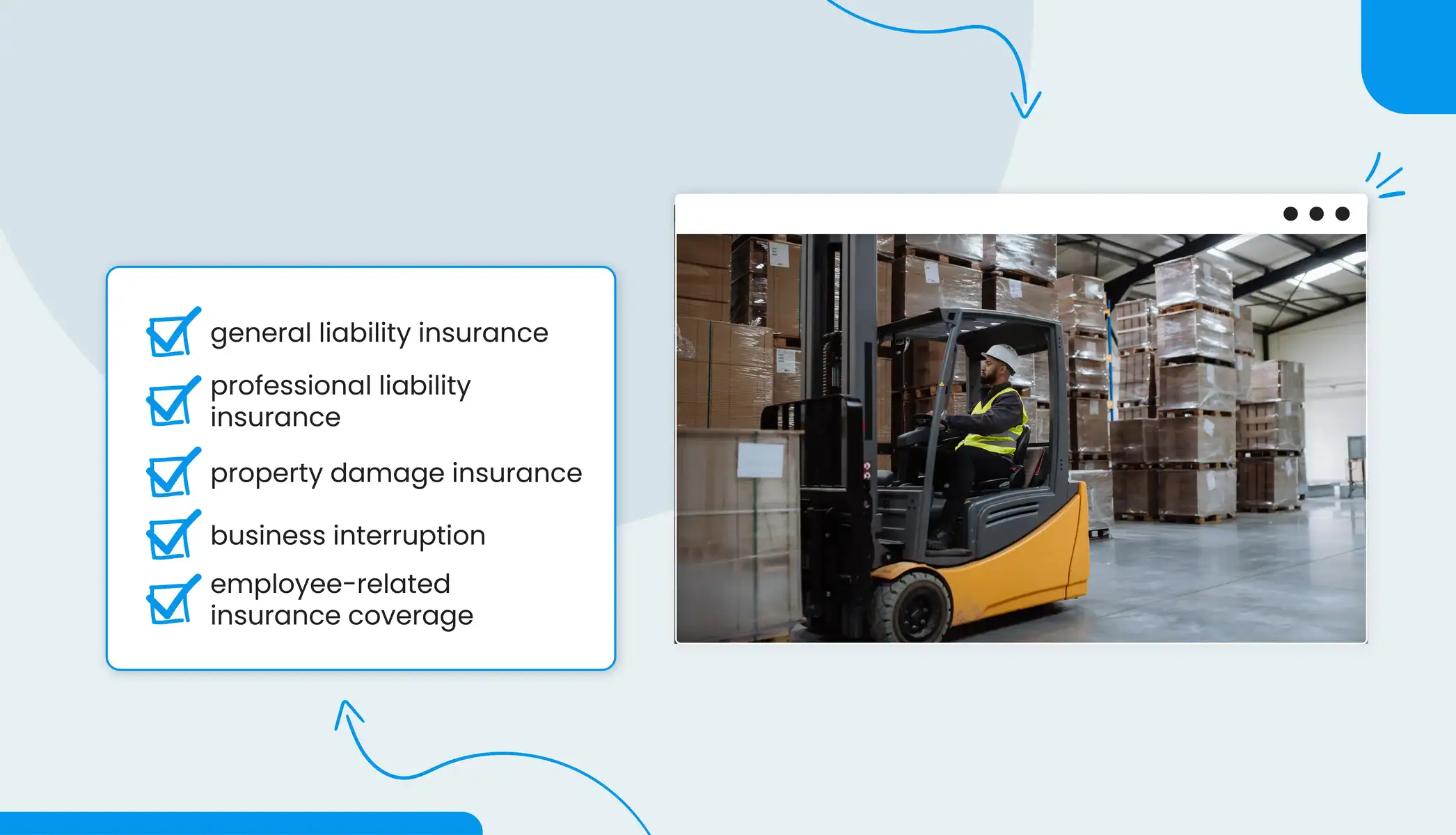
LLC insurance can address many common sources of business risk. Different businesses may opt for different types of insurance; certain businesses in certain industries can focus on just one or two forms of insurance that correlate with the biggest or most significant risks.
- General liability. Because losses and adverse events can take so many forms, business owners often seek well-rounded plans that address several sources of risk. General liability, for example, provides broad coverage to address a variety of common claims. These fall into four main categories: bodily injury, personal injury (including libel), property damage, and misleading advertising. This coverage is worthwhile for any small business that sells products or works with clients, in fact, 54% of small US businesses carry general liability coverage.
- Professional liability. In the small business world, seemingly minor oversights can lead to costly claims. Clients could claim, for example, that your services fell short of contractual expectations or even caused financial harm. In such situations, professional liability coverage (also known as errors & omissions insurance) could protect against claims involving perceived mistakes.
- Property damage. Business-owned property (such as buildings, tools, and equipment) is always at risk of damage, but the cost of repairing or replacing these items can be substantial. Commercial property insurance covers losses related to business-owned physical assets. This differs from property damage in general liability insurance, which references the potential for a customer or client’s property to be harmed.
- Business interruption. Catastrophes such as fires or natural disasters may temporarily halt business operations. This, in turn, can prompt significant financial strain: it’s not easy, after all, to cover lost revenue when also dealing with typical operating expenses such as rent or utilities. Business interruption insurance can provide some relief, helping with operating expenses until ordinary operations pick up again.
When examining different types of LLC insurance, remember: many providers bundle insurance plans. These could provide significant discounts, even simplifying coverage by consolidating various types of protection into a single, streamlined plan.
When LLC insurance becomes important
Many situations prompt a greater need for insurance coverage. In general, LLC insurance is meant to address risk, so any situation that increases risk also increases the need for insurance. These risks increase substantially, for example, when selling products or assisting customers; each interaction poses the potential (however slight) for injuries, disputes, or other damages that, in turn, might lead to claims against your business.
Keep in mind that, in some industries, insurance is not just helpful, but outright required. This is, for example, a common licensure mandate in high-risk industries such as healthcare, construction, or the skilled trades.
Beyond concerns about risk, insurance is worthwhile because it opens the door to other business opportunities. Many clients (especially corporate clients or government agencies) impose insurance requirements, for example, and these must be fulfilled before signing contracts or providing services. Insurance coverage may also be needed to work with certain vendors or to otherwise partner with other businesses.
What can happen without business insurance?
In the event of an adverse situation, a lack of business insurance could prompt significant financial losses. The previously established LLC business structure may continue to provide baseline protection, but with a few possible limitations:
- Out-of-pocket expenses. Without insurance coverage, unexpected costs could be left to the business to pay directly. These substantial expenses could involve everything from property repairs to cleanup costs or even client refunds.
- Legal fees. In the event of a lawsuit against an LLC, legal fees could add up quickly. These expenses might include attorney defense or court filing fees.
- Loss of business assets. Equipment, office furniture, and company vehicles prove difficult to replace without insurance coverage. If these are not promptly repaired or replaced, however, business disruptions are possible.
How to decide if your LLC needs insurance
There is no ‘right’ way to approach insurance as a small business owner. What works or seems reasonable in one industry or for one particular LLC may be too expensive or too risky for another business. This decision ultimately comes down to business-specific risk levels along with your own risk tolerance.
Informed decision-making is crucial; this means thoroughly researching both risks and requirements. Consider these key factors:
- Type of business and risk level. Day-to-day operations heavily influence risk and, in turn, coverage needs. Explore different sources of risk to determine which types of insurance are most relevant.
- Industry expectations. In some fields, insurance coverage is required or strongly recommended. Check with licensing boards or trade associations to confirm whether insurance is required or advised.
- Ability to absorb loss. Consider the financial implications of insurance (or the lack thereof). In the event of a loss, can your business absorb costs (such as property damage or settlements) without damaging operations or financial stability?
Preparing your LLC before getting insurance
Do your research before getting insured. You want to feel confident that your policies actually reflect major risks in your industry while also matching up with your long-term business goals. By getting organized and learning about available policies, you can get the protection you need without paying for unnecessary coverage.
Establishing an LLC is the crucial first step. This provides basic protection against liability which can then be extended via business insurance. Next, get an employer identification number (EIN). This tax ID is a must if you want to hire employees.
Preparation should also include organizing business records. This means establishing detailed and accessible files, where you can keep licensing information, tax records, contracts, or financial statements. Software solutions remove much of the guesswork and allow you to store these essentials securely in a centralized location.
A business bank account is essential for keeping finances separate. Consider also getting a business credit card, which also separates finances while also building business credit.
The right resources (along with strong organization) can make it easier to clarify where risks fall or which types of insurance might be helpful, but coverage, pricing, and approval come down to individual providers and specific business circumstances.
Getting organized and prepared can feel overwhelming, but you don’t need to go it alone. Tailor Brands offers support every step of the way. Helpful solutions for small business owners include LLC formation, bookkeeping, and registered agent services. We even offer business coaching to help you begin your LLC journey with confidence.
Conclusion
By now, you should find it a bit easier to answer: Do I need business insurance for my LLC? Some reflection may be needed, but you should be well on your way to making an informed decision that balances risk with long-term business goals and current budgetary realities.
Of course, there are many ways to protect your small business and to also protect your own financial interests. The right business structure (such as a limited liability company) provides a strong start, but that protection has limits. LLC status won’t fully shield your business from every financial or legal challenge: accidents, errors, and property damage are all still possible.
Thankfully, you can supplement LLC protection with insurance coverage. Together, these safeguards provide a strong safety net along with valuable peace of mind.
This is an important decision but not always one that needs to be made immediately. Instead, the earliest steps to launching a business should include forming an LLC, opening a business bank account, and getting organized.
To make the right decision for your business, take a close look at realistic risks and your own comfort factor: how much you’re willing to pay for coverage and how much exposure you’re able to shoulder on your own.
Choose carefully, and you’ll strengthen the robust protections already gained through LLC formation, all while setting yourself up for long-term business success.
FAQ
No, LLC status protects personal assets from business debts, but it doesn’t cover things like property damage, professional errors, or misconduct claims.
Yes, single-member LLCs often need insurance even more since there are no partners to help absorb financial losses if something goes wrong.
Common types include general liability, professional liability, property damage coverage, and business interruption insurance.
Without insurance, a business may face significant out-of-pocket expenses, legal fees, and difficulty replacing damaged or lost assets.
Consider your business’s risk level, industry expectations, and your ability to financially absorb a loss without insurance coverage.