
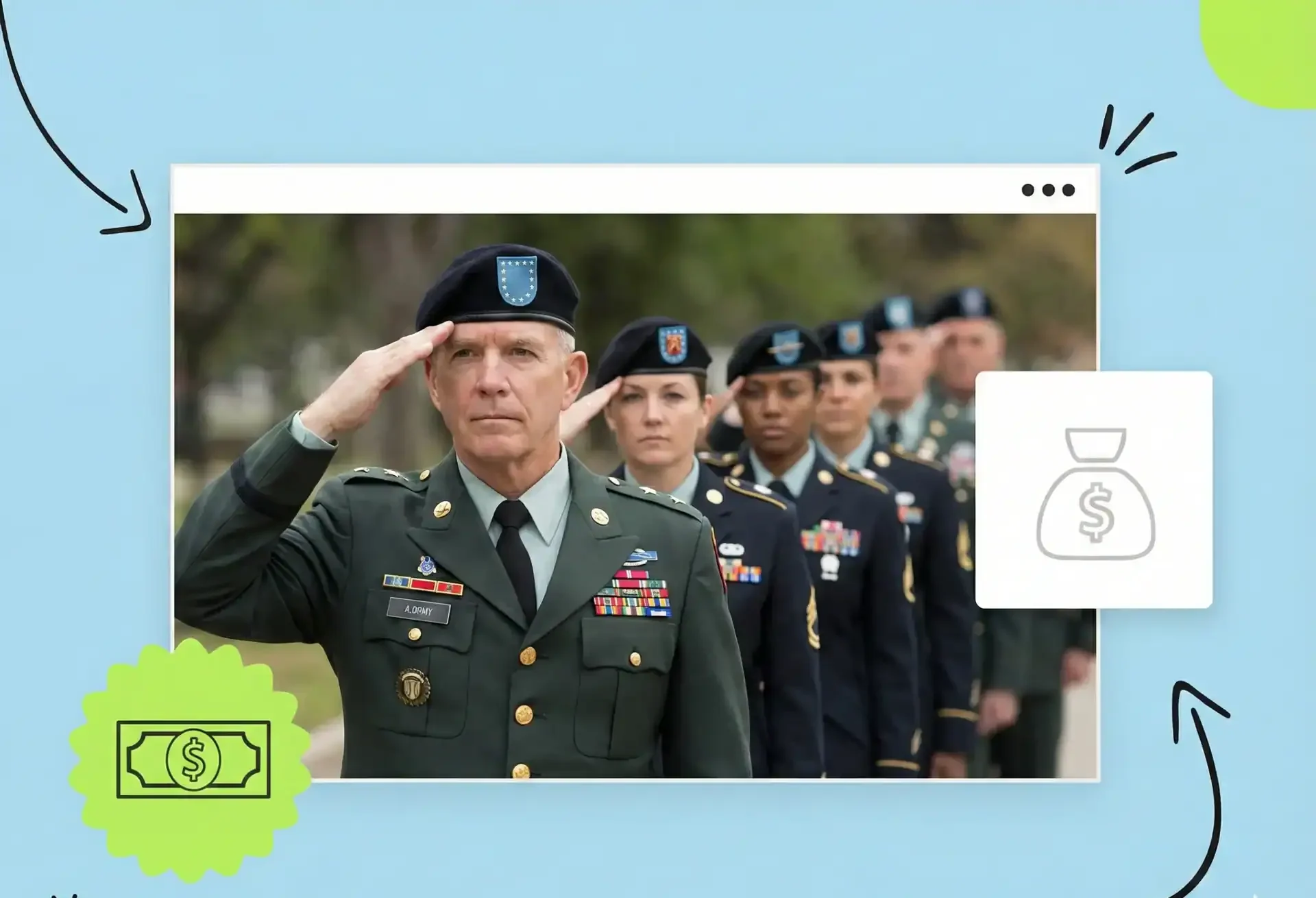
For many veterans, entrepreneurship is the ideal path after military service. They can use their skills, knowledge, and leadership to start a business from the ground up. The problem is often funding. Starting or growing a business takes access to cash, and loans are not always the best or only option.
Small business grants for veterans exist, but they are highly competitive. You’ll need to meet very specific eligibility requirements. And, you don’t repay grants.
Business grants for veterans are available to many people, once you know how to find and win them. Let’s take a closer look at grants for veterans to start a business.
What is a small business grant?
A small business grant is funding that does not require repayment. The funds may come from a government program, a foundation, a company with a special mission, or through other organizations. Nonprofits and private organizations offer them.
Most are awarded for a specific business purpose. They may align with the organization’s goals or missions. Some have a specific objective, such as for research or community impact.
How business grants work
A small business grant is an application-based and competitive program. Not everyone who applies receives them. Eligibility requirements must first be met. Then, the organization chooses among applicants to award the funds.
Most often, funds are restricted to approved business uses. There is often the need to document and report how the funds are being used to the organization that provides them. That ensures the organization’s objectives are met.
Are grants really “free money”?
In a way, business grants are free money. You do not repay them. However, there are times and compliance requirements to meet to keep the funds.
It’s also important to know that these are not guaranteed. Even if you have excellent credentials and check all of the boxes on the grant application, your business may not be selected.
Yet, they are critical tools. The work to support specific goals, including entrepreneurship, job creation, and economic development. Grants for veterans to start a business often provide a valuable resource to support the growth of businesses.
Why small business grants for veterans exist
There are many reasons organizations offer veterans small business grants. Veteran entrepreneurs are often eligible for specialized funding for various reasons, such as:
- Recognition: They work as a thank-you type of support for the veteran’s military service
- Transitioning support: Many provide specific focus to help transition from military service into civilian entrepreneurship.
- Initiatives to give back: Many of these federal and private initiatives are focused on veteran-owned businesses as a way to support those who gave so much.
Some of the business grants for veterans are exclusive to veterans. Others have a preference or priority for veterans that can work in your favor.
Grants vs. capital
One of the most important differences to consider in grants for veterans is that they are not the same as capital. Capital comes at a price, sometimes with no repayment requirements, from angel investors, but with a stake in the company.
Here is an example.
You will often see Hivers and Strivers listed on “grant” lists. It is an Angel Investment Group. They provide capital ($250k – $1M) in exchange for equity (ownership/shares) in your company. That’s an important distinction. They are taking ownership of a portion of your company.
A grant is free money. It is taxable income, but you do not pay it back. By contrast, Hivers and Strivers is an investment partner. You may wish to use their services if you are a high-growth startup that is willing to sell a portion of your company to the organization.
Disabled veterans small business grants
Some funding and support programs are meant to support service-disabled veterans who want to start or grow a business. Disabled veterans’ small business grants can be an important financial resource, but come with a few specific requirements.
What qualifies as a service-disabled veteran-owned business?
To obtain these funds, your business must be 51% owned and controlled by a service-disabled veteran, recognized by the VA as such. The veteran must manage daily operations, and the disability must be service-connected and documented.
Federal and nonprofit programs for disabled veteran entrepreneurs
Take a look at some of the programs that could fit your specific needs as a disabled veteran.
VR&E Self-Employment Track (Chapter 31)
This is a VA-funded program that purchases approved business assets for businesses. That includes equipment, tools, inventory, and licensing costs. They do not provide cash. It is available to service-disabled veterans (typically 20%+ rating) who qualify for the VR&E Self-Employment Track.
Stephen L. Tadlock Veteran Grant (Founders First CDC)
This program provides $1,000 cash micro-grants for veteran-owned “main street” businesses, with preference for disabled veterans. Business must be the owner’s primary source of income to qualify for this program.
Entrepreneurship Bootcamp for Veterans (EBV – IVMF)
This is a no-cost entrepreneurship program exclusively for post-9/11 veterans with a service-connected disability. It provides a range of services, including training, covering travel and lodging in many cases. You also receive access to alumni-only funding, legal services, and software grants.
Top small business grants for veterans
Other small business grants for veterans open the door for opportunities without disability requirements. These are actual, verified grant examples. These are some of the options out there, though there may be others as well.
Grants and programs for veteran startups
These grant programs specifically focus on veteran startups. If you’re just launching, this is where to start.
Melissa Washington Small Business Award
You may receive a grant of up to $5,000 for a woman veteran to start or expand her business. This award comes with more than the funds, including coaching, recognition, and may help with early-stage costs. These applications typically open annually, with quarterly cycles possible.
StreetShares Foundation Veteran Small Business Awards
This grant program for veterans offers annual grant awards of up to approximately $15,000 for veteran entrepreneurs. It is designed to support both startup and early-stage veteran-owned ventures in a range of areas. It’s issued by a veteran-run nonprofit, making it an ideal fit for many. It is mission-focused and highly competitive.
Warrior Rising Grant Program
The Warrior Rising Grant Program provides grants and ongoing mentorship to veteran entrepreneurs. It’s not purely cash provided. It also offers training with financial support for startup needs.
Grants and programs for existing veteran-owned businesses
These veteran small business grants help support businesses already in existence. They can provide you with access to a range of funding uses.
Farmer Veteran Fellowship Fund (Farmer Veteran Coalition)
These grants are awarded to veteran farmers or ranchers to support equipment, supplies, and operations. They are administered by a national nonprofit focused on veteran reintegration in agriculture.
Veteran EDGE Conference (IVMF)
This program has a very narrow focus. It is specifically for “growth stage” ventures. It is not a cash grant but provides educational outreach that can be critical at this stage. It’s open to both veteran and military spouse business owners.
Hiring Our Heroes Small Business Grant
This is a major veteran grant opportunity of up to $25,000. The application window is very narrow (the 2026 window is closed). The next round opens in October or November of 2026 for the next year.
Creative Forces Community Engagement Grants
This is not just one grant program, but several opportunities. It provides grant amounts of up to $10,000 to $50,000, with matching funds often required. It is best for arts organizations or nonprofits supporting military communities in some way.
What to do before applying for veteran business grants
Before you jump in and apply to any of these grant programs, you have to present the best possible application. To do that, there are several critical factors to keep in mind.
- Make sure your business is properly formed. You’ll need to demonstrate that the business is authentic.
- Register your business properly. Ensure you choose the right business structure for it. These are factors considered on applications. LLC formation tends to be one of the best options for small businesses for veterans. It provides protection for your personal assets and shows you’re serious about business ownership.
- Ensure all business information is up to date and accurate. Your records, including ownership, expenses, and profits, need careful and clear management.
- Make sure you understand basic compliance requirements based on your industry.
Present the best possible business application by having all of the details worked out. A business plan can be a helpful starting point, as is establishing your business through the formation of an LLC.
Take the time to learn how to start a business as a veteran. Meet all of the legal requirements in your state for doing so.
Tips for 2026 applications
Before you start applying, remember these specific tips:
- Have your DD-214 ready: Almost every veteran-specific grant will require a redacted copy of your DD-214 or proof of service immediately upon application. You can obtain access to it through the VA if you don’t have it ready.
- Update your “Sam.gov” profile: If you are looking at federal grants (like the SBIR/STTR programs for tech), ensure your Unique Entity ID (UEI) is active on SAM.gov. It only takes a few minutes to verify this information.
- Know Your “Ask”: Grants like the Farmer Veteran Fellowship or Melissa Washington Award often want to know exactly what you will buy with the funds. Be specific. For example, “I need $4,500 for this specific tractor attachment,” not “I need money for marketing.” Specificity wins more attention.
Conclusion
Small business grants for veterans are highly valuable resources, and those grants can help you achieve your goals without requiring repayment. However, they are competitive.
Most veterans should explore multiple grant opportunities and stay informed about new ones being developed. Be ready to act. Grant window applications are often short, and the competition is fierce.
With a strategy, you can obtain these grants and use them to launch the next adventure of your life.
FAQ
Yes, grants don’t need to be repaid, though they often come with compliance requirements and reporting on how funds are used.
The business must be 51% owned and controlled by a service-disabled veteran who is recognized by the VA and manages daily operations.
A grant is free money with no repayment, while capital, like from Hivers and Strivers, is provided in exchange for equity or ownership in the company.
Applicants should have a redacted DD-214 ready and confirm their Unique Entity ID is active on SAM.gov for federal grant eligibility.
Proper business formation, such as an LLC, shows legitimacy and asset protection, which can strengthen a grant application.