
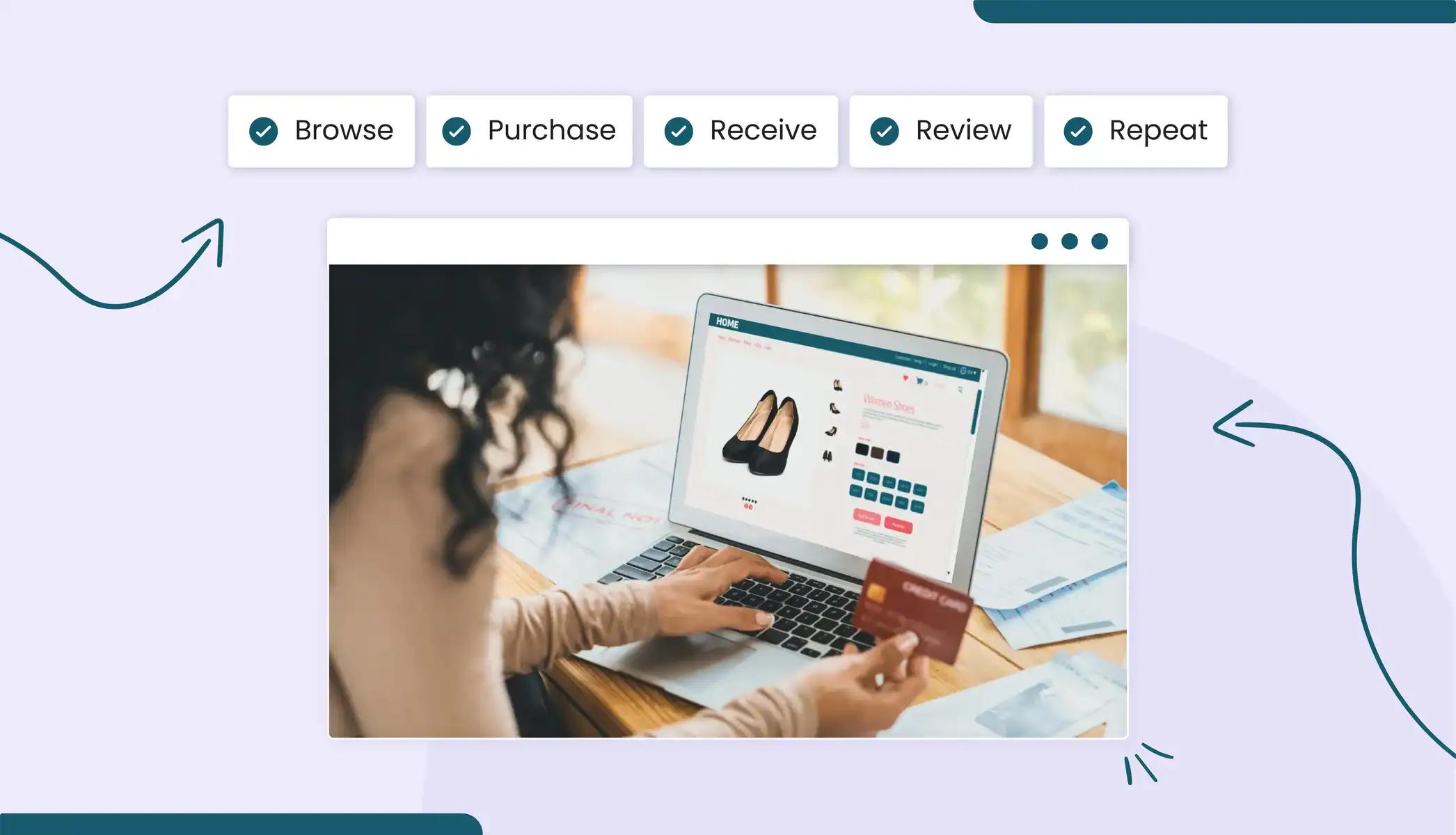
In a traditional brick-and-mortar store, shoppers have every opportunity to wander around, hesitate, consider, ask questions, or maybe even pick an item up just to see what it feels like in their hands.
But online, none of that is possible. Instead, every interaction a customer has with your shop boils down to clicks, load times, and whether that person ultimately feels confident enough about an item to buy it (or not).
Ecommerce customer experience has a huge and very direct impact on your bottom line for that reason. Shoppers can impulsively decide to leave your store in a millisecond, so even minimal points of friction (e.g., unclear shipping costs or vague product descriptions) can easily add up to lost revenue.
A huge part of truly understanding how to improve ecommerce customer experience is about learning to see potential friction points as opportunities. In this guide, we’ll go over everything you need to know to make it as easy as possible to say “yes” to a purchase and preferably come back again (or tell others to come shop with you, too).
What is ecommerce customer experience?
The term “ecommerce customer experience” collectively refers to every interaction a customer might have with your brand across all possible digital touchpoints. This includes everything from their first click on an ad or a search result to their ongoing experience with your brand after their purchase arrives.
That said, a truly great experience is about more than just your website design (although that’s certainly part of it). It’s the whole customer journey, including:
- Product discovery (e.g., search and navigation)
- Product pages (e.g., images, reviews, and descriptions)
- Checkout flow and payment experience
- Delivery updates, tracking, and communication
- Customer care and return process
- Post-purchase emails and other follow-ups
Plus, this journey rarely to never flows in a perfectly straight line. For example, a customer might first discover your site via their phone and return later on their desktop system. They might also compare your product to what your competitors have to offer, or read a few reviews before closing a purchase later.
A great customer experience can make all the difference between someone completing a purchase with you and losing them to a competitor. Core factors to consider include:
- Speed: How fast is your site, and how quickly can visitors complete actions?
- Clarity: Is it easy for potential buyers to understand what you’re offering?
- Usability: Is your site intuitive and user-friendly?
- Trust: Do prospective customers feel comfortable buying from you instead of someone else?
If there are issues with any one of those things, the whole experience suffers.
Why ecommerce customer experience is important
Keep in mind that if you’re starting an ecommerce business, your competition is never more than a new tab and a click away. There aren’t any physical barriers to leaving, so it takes only fractions of a second for a customer to decide to abandon a cart, find an alternative, and buy what they want elsewhere.
Customer experience in ecommerce is important because it’s one of the biggest drivers of both conversion and retention. In fact, it’s likely already affecting your business and your bottom line for better or worse. 73 percent of customers now say CX is the number one thing they consider when deciding whether to purchase from a company.
Cart abandonment is friction-sensitive
Slow load times, too many extra steps, or even one surprise cost is all it takes to push a customer away.
Trust drastically influences conversion
Even if you’ve done your research on how to price products and they are competitive, a weak presentation or policies that aren’t clear can fuel hesitation.
Reviews and social proof impact future purchases
A bad experience doesn’t just cost a brand one customer. Bad reviews and negative word-of-mouth can turn future customers off, as well.
Repeat purchases correlate with the full journey
Post-purchase experiences that feel smooth and reliable help encourage past customers to return. It also makes them more likely to recommend your shop to their friends, allowing you to extract maximum value from every interaction.
5 ways to improve ecommerce customer experience
Ready to start wowing your customers with the stellar experiences they deserve? Here’s how you get the ball rolling in the right direction.
1. Remove friction from checkout
Your checkout process is where interest and intent either convert to revenue or disappear entirely. Every step the customer has to take to continue to the next one can potentially increase the chance of a cart abandonment and retaining your customers.
You can minimize the chances of this happening by:
- Offering guest checkout options instead of requiring account creation for every purchase
- Asking only for what you need on fill-in forms
- Clarifying shipping costs upfront
- Integrating digital wallet options (e.g., Apple Pay or Google Pay), especially for mobile customers
- Optimizing your entire site experience, checkout included, for mobile
Transparency is a huge deal to today’s consumers. The better people understand what they’re paying for right from the get-go (and how long things will take), the better.
2. Strengthen product pages to reduce doubt
Customers can’t hold an ecommerce product in their hands or ask a sales associate questions about it. Your product pages have to do all the heavy lifting here, so plan them with this reality in mind. Strong product pages help customers make decisions and include essentials like:
- High-quality images and video that show the product from multiple angles, in use, etc.
- Product descriptions that cover how the product solves problems, not just what features it has
- Clear sizing and specification guides, especially for clothing, tech products, or furniture
- Client feedback, customer reviews, and other forms of social proof that answer common questions
- Clear, easy-to-find return policies
Great product pages answer a customer’s questions before they even realize they have them.
3. Improve post-purchase communication
The moment just after checkout is actually the moment when uncertainty is most likely to set in, so how you handle this part of the ecommerce customer experience counts for a lot. Be clear and proactive about communication by offering:
- Immediate order confirmation that lets customers know their purchase was successful
- Clear delivery timelines that don’t leave buyers guessing
- Proactive delay notifications, should anything go wrong
- Tracking information that makes it easy to follow shipment progress
- Follow-up emails to confirm delivery, ask for feedback, suggest other products, etc.
Leaving a customer in silence after a purchase fuels doubt, but clear communication builds trust and reinforces the likelihood of future purchases.
4. Personalize the shopping experience intelligently
Personalization can help modern brands meet customer expectations and enhance ecommerce customer experience, but it needs to be helpful. Think relevance, as opposed to pressure. Some upgrades to focus on might include:
- Smart product recommendations based on browsing behavior or past purchases
- Browse-based email reminders that gently nudge without overwhelming
- Dynamic behavior-based homepage recommendations
- Location-aware shipping messaging (e.g., promotions that apply to the customer’s region)
Restraint is the key to success here. Personalization should feel fluid, natural, and helpful, not make customers uncomfortable.
5. Make returns and support effortless
Support quality (or the lack thereof) is where you either strengthen a customer’s long-term trust or lose it forever. Because even if everything goes right, a support request or return process that’s too complicated can still prevent the person from coming back in the future.
Focusing on options like the following:
- Easy-to-find return policies that don’t force the customer to hunt around
- Self-service return options that don’t require customers to contact support directly
- Clear refund timelines that manage expectations
- Multiple accessible support channels, including chat, email, etc.
- An FAQ section or help center to help cover common questions upfront
Fair, simple returns and refunds keep customers confident about shopping with you. They’re golden opportunities to turn potential negatives into reasons to return.
Measuring ecommerce customer experience improvements
Naturally, improving ecommerce customer experience isn’t something you do just once. It’s an ongoing process, and proper measurement is how you know whether you’re moving in the right direction. Implement an evaluation and monitoring process that incorporates key metrics like:
- Conversion rate: Are more visitors completing purchases now than before?
- Cart abandonment rate: Are you seeing an uptick in customers completing purchases versus abandoning their carts?
- Repeat purchase rate: Do your customers come back for more after their initial experiences?
- Support ticket volume: How often are your customers running into issues requiring direct assistance now versus before?
- Review sentiment: Are customers raving about their experience shopping with you or complaining about it?
Metrics like these reveal important information about where improvements are making a difference and where friction is still a problem. Promptly addressing issues as they arise helps refine your approach over time.
Supporting strong ecommerce customer experiences with better operations
Fantastic customer experiences in ecommerce don’t exist in a vacuum. They’re fully supported from behind the scenes. Think essentials like organized product data, reliable inventory tracking and fulfillment processes, consistent brand presentation, and airtight internal workflows.
Adding the right tools and platforms to the process can help modern brands like yours bring better structure into the mix. For example, Tailor Brands specializes in helping entrepreneurs keep business operations running smoothly by supporting reliable ecommerce customer experiences.
Conclusion
The overall experience customers have with your brand when shopping with you online shapes how they feel at every step of the purchasing process, from the moment they first discover what you have to offer to how they feel about you once delivery is complete.
For that reason, the most impactful improvements you can make off the bat are practical in nature, like minimizing friction at checkout, building stronger product pages, and keeping post-purchase communication as clear as possible.
Consistency is the key to both initial success and successful progress maintenance, so how you monitor results and refine small details moving forward matters. Get started today!