
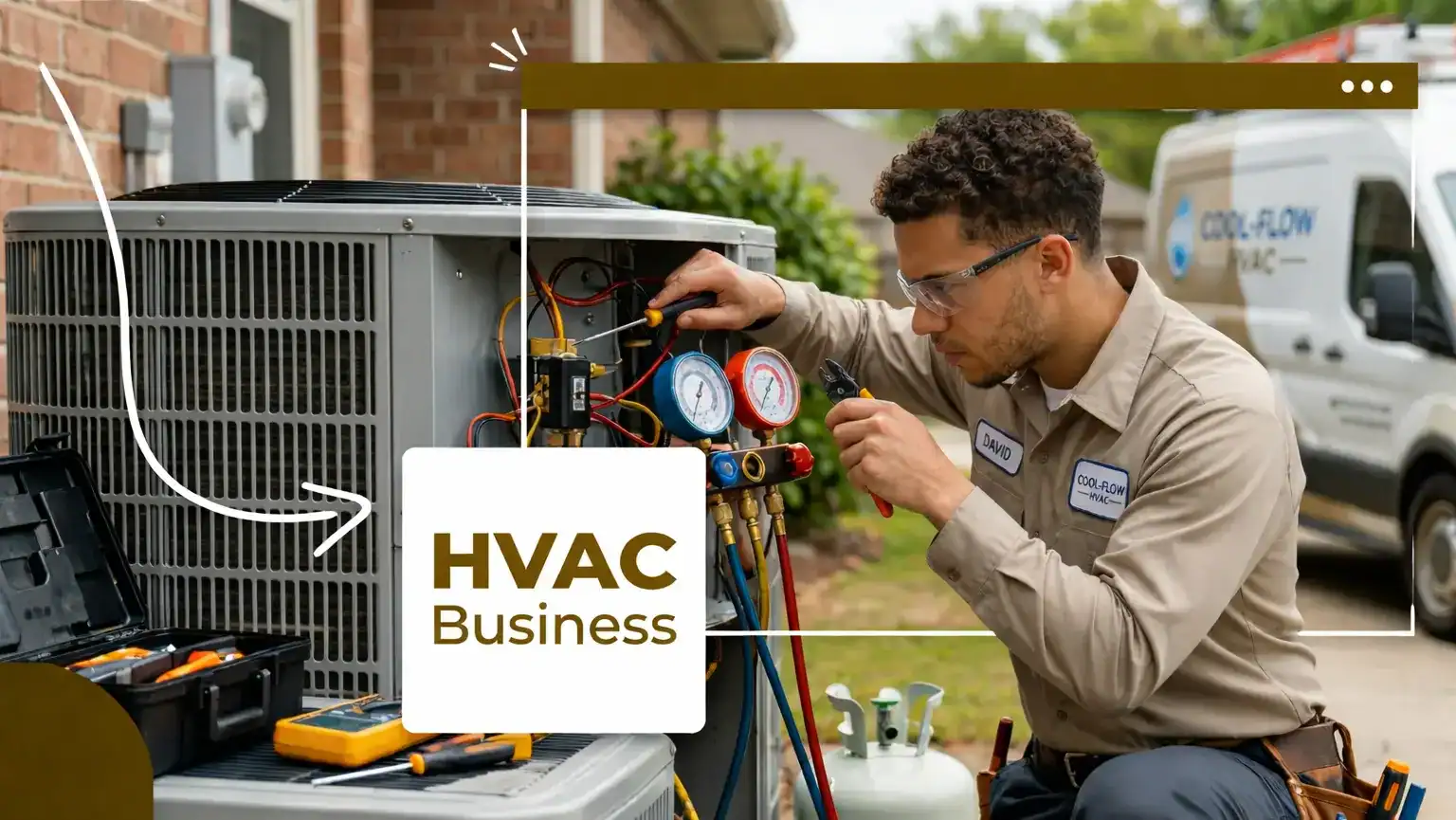
If you are thinking about opening your own HVAC company, you probably know what you are doing on the technical side. But what about when it comes to the actual business itself? Well, that’s a whole different ballgame entirely.
Starting a business is already a tough endeavor to take on. And, as you already know, the HVAC industry is a skilled and well-regulated trade. Well-regulated, that’s code for: there are a lot of qualifications you need, papers you need to fill out, and hoops you need to jump through before you can take on your first customer.
But if being your own boss is your dream, then don’t let a few bumps in the road stop you. This brief guide provides an overview of some of the legal and compliance requirements for starting an HVAC business.
What is an HVAC business?
HVAC stands for heating, ventilation, and air conditioning. In general, it covers everything that keeps a house or building at a comfortable temperature, no matter what is happening outside.
HVAC companies offer a wide variety of in-demand services, such as installing furnaces or A/C units, repairing faulty units, conducting preventive maintenance on residential and commercial units, and handling refrigerant safely and legally. Some HVAC businesses choose to serve the consumer market, focusing on residential homes, while others prefer to work on large commercial projects. The field of HVAC offers many opportunities for businesses to specialize, or to take a more “one-stop-shop” approach. But what a real HVAC business is not is a fly-by-night “handyman.”
Adhering to codes, dealing with inspections, and handling compliance issues are all in a day’s work when you own a HVAC business.
Is it hard to start an HVAC business?
Well, it’s not easy.
Pretending otherwise wouldn’t be fair to anyone who wants to learn how to run a successful HVAC business. Although already working in the industry will give you a leg up when it comes to starting your own HVAC business, practical experience and technical know-how are far from the only factors that you need to consider.
Requirements differ depending on the location of your business. Both states and local municipalities may have their own requisites. Typically, these include:
- Getting a contractor’s license.
- Having documented real-life experience in the industry.
- Passing trade and business exams.
- Maintaining liability and business insurance.
There are no shortcuts when it comes to
At the end of the day, if you want to start an HVAC business with little or no training and experience, you are looking at an intensive multi-year project, not a quick path to profit.
What licenses are needed to start a HVAC business?
Before spending time, money, and mental resources on starting a new HVAC business, it is beneficial to get a brief reality check on the licenses you will need. While you may already have one or two of these, before you can open your HVAC business, you are likely to require a few more.
State or local HVAC contractor’s license
Many states and local governments require anyone starting an HVAC business to hold a contractor’s license. This can be a major hurdle for those getting into the industry, because to get a contractor’s license in many areas of the country, you can’t just pass a test; you must have a certain amount of verifiable experience, often between 2 and 5 years.
Even in places where there are no or more lax time requirements, you will still most likely need to pass a trade, business, or legal exam before you can operate your business.
EPA Section 608 certification
It is a federal requirement that anyone who installs, services, repairs, or disposes of equipment that could release ozone-depleting substances or HFC substitutes, such as AC systems, must have EPA Section 608 certification. This requirement was added under the Clean Air Act and is mandatory everywhere in the US.
There are four categories of certifications you may need to hold. These include small appliances, low-pressure, and high-pressure systems. The fourth certification category allows you to work on all types of units.
Local licensing and business registration
Since local leaders are more likely to hear direct negative feedback from their voters, some of the most restrictive and time-consuming licensing takes place at the local level. These can include local business registration, separate permits, municipal-level exams, and other requirements. A visit to your local business licensing office may be worthwhile.
In many cases, before you can receive local licensing, you will already need to have a registered business and an Employee Identification Number. This is because some municipalities issue local trade licenses to the business, not to the owner. Remember, trade licenses and business registration are not the same thing.
Insurance and bonding
Nobody likes paying for insurance, but when you own a business, it’s a must. All HVAC businesses are usually required to have a general liability insurance policy (often required before applying for a license), and those with employees must have a workers’ compensation policy.
It is important to understand how to choose business insurance and depending on the amount of insurance you are required to cover, the premium costs can be high.
A surety bond is also a consideration. A surety bond financially protects customers if a contractor fails to complete the work properly, violates codes, or does not meet the terms of the agreement. It is often a prerequisite for licensing.
Surety bonds typically cost between 1% and 5% of the total value of the bond.
Experience and eligibility requirements
HVAC is a skilled trade that requires extensive training to enter. That is great for customers because they know they are getting someone who knows what they are doing, but it is also good for experienced technicians because it prevents unskilled labor from flooding the market. The only time when it could be a negative is when you think you have enough experience to operate your own HVAC business, but the law thinks otherwise.
Becoming an HVAC contractor takes time. Many states ask for documented supervised work before you can even apply for licensure. The usual path from apprentice to journeyman and ultimately to a contractor can take five years or longer. Formal training can cut some time from that number, but you still need the experience.
However, in some areas of the country, you can hire someone who already has all the necessary licenses to work for you. Under this arrangement, you are responsible for the business side, while your employee handles the practical aspects. Another alternative is to purchase an HVAC franchise. Going this route offers a quicker way into the business, but leaves you dependent on a third party to legally operate.
How much does it cost to start up a HVAC business?
Starting your own HVAC business takes a lot of knowledge and time, but then there is the money. While it isn’t as expensive as some other small businesses, it isn’t cheap either. Some of the more common expenses you’ll need to budget for include:
- License application & exam fees. The state and local fees for license applications and the cost of sitting for an exam can range from $300 to $1500, depending on where you live.
- Insurance premiums. General liability and workers’ comp insurance policies can cost $1000 to $5000 per year, depending on the amount of the policy and the coverage that you need.
- Bonding costs. The annual cost of a surety bond is usually between 0.5% and 10% of the value of the bond, based on your credit. HVAC companies typically pay between $100 and $1000 per year.
- Tools and equipment. Specialty tools can be a significant expense, but many HVAC companies start with only the essentials and expand their toolboxes over time. The cost can be between $5000 and $20000.
- Work truck or van. HVAC is a mobile trade, and a good work truck is essential. Costs can range from $10000 for a used vehicle to $50000+ for something newer.
- Software & scheduling tools. Software can help with estimates, invoicing, staffing, payroll, taxes, and more. Costs can be up to $300 a month for SaaS solutions.
- Marketing & branding. Building a website, local ads, vehicle wraps, and lead generation cost between $1000 and $5000 upfront, and some advertising options have ongoing monthly fees.
Registering and structuring your HVAC business
Having the proper legal and financial structure in place is one of the first things you should do when starting your own HVAC business. Although it does not guarantee licensing approval, replace contractor license requirements, or eliminate the need for insurance, it is still critical to your business’s success.
Choosing a structure
Many HVAC companies choose to register as an LLC because it helps protect owners’ personal finances from the business’s financial obligations. LLCs are relatively simple to set up and run compared with other types of business structures.
EIN and banking
An EIN (Employer Identification Number) is required for hiring employees, but it is also commonly requested when filing other business-related paperwork. You don’t need to have, or plan on having, any employees to register for an EIN.
Financial organization
Putting your money matters in order is a priority since it can affect licensing, insurance, and growth. In particular, focus on getting a business checking account and a structured bookkeeping system.
How to run a successful HVAC business
Learning how to start an HVAC company is one thing, but knowing how to run a successful HVAC business is something else entirely. A good business is not based on technical ability in the field, but on how well you master the following skills:
- Accurate estimating and bidding. Understand labor, material, and fixed costs, so you can make accurate bids that won’t cost you money or lose customers.
- Scheduling and dispatch systems. Know how to use technicians and schedule appointments in the most efficient manner.
- Hiring qualified technicians. Learn how to find, hire, and keep quality people across your company.
- Maintaining licenses and insurance. Manage license and insurance renewal accurately and in a timely manner.
- Building recurring maintenance contracts. Seek out long-term maintenance agreements to ensure a predictable income.
- Customer reviews and reputation. Encourage satisfied customers to post positive reviews and learn how to handle negative ones.
- Monitoring compliance and renewals. Keep up to date on compliance issues and renewal dates to stay legal.
Conclusion
Starting your own HVAC business is an achievable dream, but it requires time, planning, resources, and a good understanding of the licensing and regulatory requirements. Pausing to take a realistic look at where you are now, and being honest about whether you are prepared to move forward, can save you disappointment if you determine it is not the right business for you at this time.
On the other hand, if you know you want to start your own HVAC business, laying a solid foundation from the start is the best way to build a strong, thriving company.
FAQ
Yes, most online sellers need a general local business license and often a sales tax permit, since licensing is based on where the business operates.
No, these platforms don’t issue or verify local business licenses, so sellers are still responsible for meeting their own local and state requirements.
It depends on volume and intent, since casual, occasional selling typically doesn’t require a license, but regular selling for profit usually does.
Most need a general local business license and a sales tax permit, with home-based sellers sometimes also needing a home occupation permit.
Consequences can include fines, late fees, sales tax penalties, and difficulty opening a business bank account or securing a lease.