
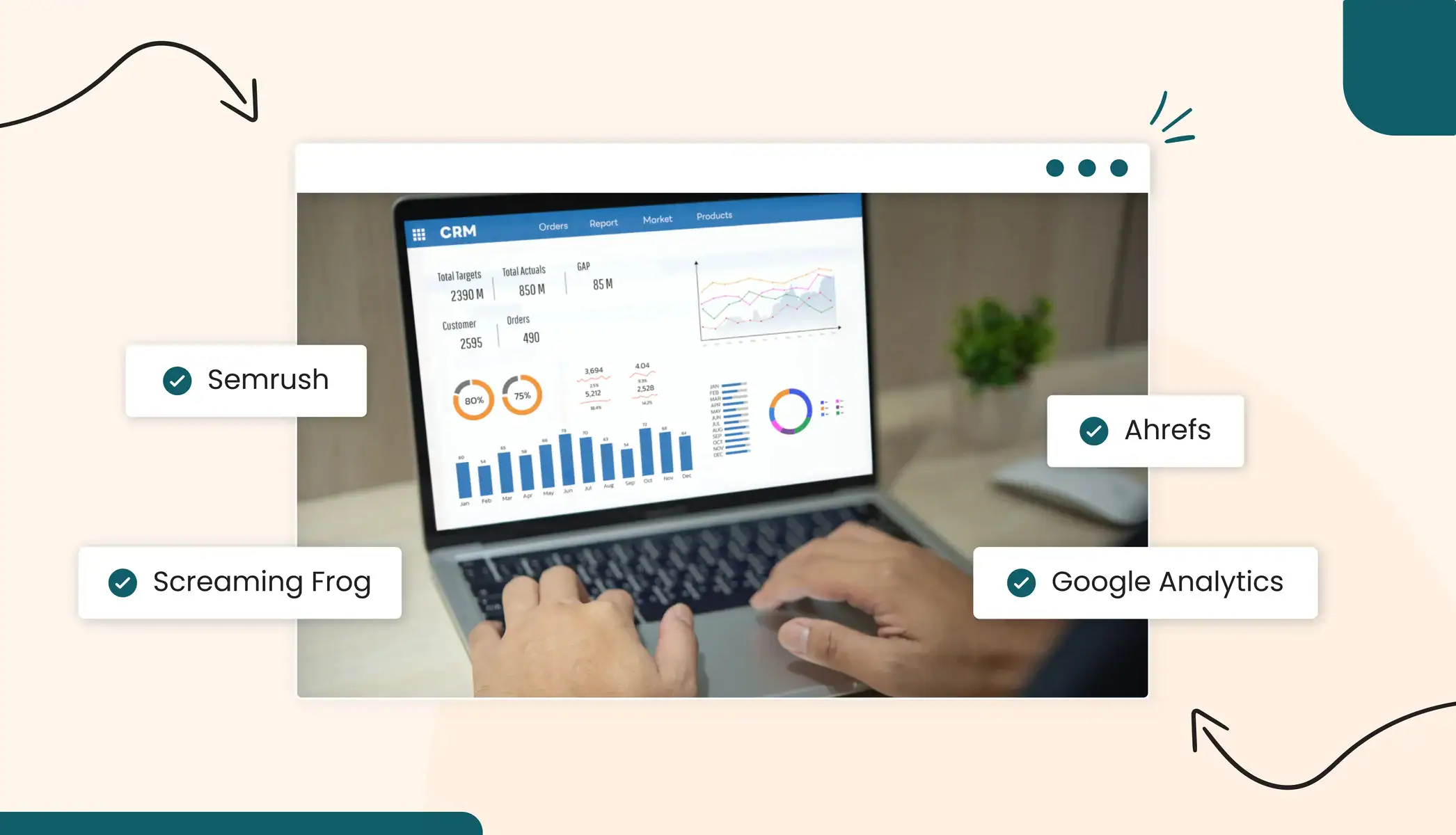
As a small business owner, you know the importance of being found by customers. It’s critical to keep your business operational. Search engine optimization (SEO) is a process that helps you appear in the search results. SEO isn’t a single step or process. It involves numerous elements, including understanding keywords, creating content, technical setup, and tracking and adjusting your strategies over time.
It’s clear that this means a lot of work to do it well. The good news is that numerous SEO tools can both make these tasks simpler to manage and help you get found more readily. Remember that these may be the best SEO tools as they offer support, but they do not guarantee rankings or results.
But, where do you start? The best free SEO tools for your small business are those that provide an effective strategy that drives more sales. Let’s talk about what goes into that process.
What are SEO Tools?
SEO tools are any type of software product that helps you analyze, improve, and track your website’s performance in the search engines. It shows you how search engines see and value your site, and what factors contribute to or detract from ranking high on the search engine results page.
You can use SEO tools for numerous necessary tasks, including:
- Keyword research
- Content optimization
- Site audits
- Tracking rankings
- Adjusting strategies to achieve better results
Most of the time, you’ll use more than one tool. However, that doesn’t mean you have to use dozens of small business tools either. Choose based on the importance of ranking to your business and your level of industry experience.
Why small businesses use SEO tools
It’s possible for you to do more with less time and lower cost when you use SEO tools instead of trying to do the work yourself. In short, these tools provide the following:
- Identify what people are searching for
- Improve your website content and structure
- Track your website’s rankings and performance
- Understand who your competitors are and what they are doing to rank against you
You may be wondering, how long does SEO take? The truth is that SEO is not a simple process. Rather, view it as a long-term investment of time and skill. Tools provide you with valuable data, but you’ll still need to make critical decisions and use your own judgment to know how to bring in customers.
With that in mind, consider each of the best SEO tools for small businesses with a bit of careful attention. Not all will give you enough information to make valuable decisions, and some could downright cost you money. That’s why it’s so helpful to have a guide like this to know which are the best tools for small businesses.
Types of SEO tools
Small business SEO tools come in various forms, mostly broken down by what they do to provide you with valuable website information. Let’s break down some of the most common SEO tools for small businesses and how they work.
Keyword research tools
These tools help you find words people use to search for the services or products you offer. These “keywords” are critical to include on your website to show search engines that you meet the searcher’s expectations. Use keyword tools to help guide your content creation. They don’t guarantee traffic, but they do tell you what people are looking for when searching for a business like your own.
Some examples of these tools include:
Site audit and technical SEO tools
Some SEO tools for small businesses help you identify problems with your website’s functionality. Any of these stumbling blocks, errors, or oversights can impact website performance. When that happens, it hurts your business in several ways. That includes making it harder for both visitors and search engines to find your website. Technical tools like this improve and support visibility, but they’re not the only factor.
SEO audit and technical tools address concerns such as broken links, slow-loading pages, and errors. Some of the best SEO tools for site audits include:
Rank tracking tools
Many small business owners focus on these tools. They want to see if their efforts are helping improve their rank or position on search engine results pages. Rankings are never static. They change often and must be reviewed regularly.
Some of the best SEO tools for rank tracking include:
- SEMrush
- Ahrefs
Content optimization tools
These tools allow you to modify existing or create new website content for your business. They help you improve content structure and relevance to encourage improved results. Remember that these tools help with ranking, but the content still must meet the unique and specific needs of your readers. There’s no value to getting traffic to your site only to disappoint them.
Some of the best tools for content optimization include:
Analytics tools
The details are in the data, and analytical tools help you to keep track of critical data points. That includes tracking traffic, user behavior, and performance. They provide you with clear data that allows you to then make decisions. To be effective, you need to understand the data and apply it to your website effectively.
Some of the best SEO tools for analytics include:
- Google Analytics
- Google Search Console
Best SEO tools for beginners
Some tools are easier to use and offer greater support for those just starting out in SEO. They may not offer the in-depth level of support you need in all aspects.
These are tools that require limited setup as well. You will find them efficient at setting them up. But they prioritize simplicity over advanced features. In most cases, you can start in this area as a beginner, but expect to need to update and grow over time with additional tools.
If you’re a beginner, we encourage you to start learning with these tools:
Google Search Console
Google Search Console is a straightforward, free tool provided by Google itself. It provides you with information at the surface level, including the technical health of your website, search performance, including clicks, rankings, and impressions, and indexing coverage. It’s a good tool for understanding how Google sees your website.
Google Analytics
Google Analytics is also a free tool from Google that helps track, measure, and report website traffic. It helps you get an idea of how people are using your website. It provides insight into visitor demographics, top content on your site, and conversation actions.
Ubersuggest
Ubersuggest is a user-friendly tool that supports keyword research, competitor analysis, and site auditing. It offers content ideas but provides only a lower level of insight into ranking your site.
Yoast SEO
If you have a website based on WordPress, then you have access to Yoast SEO, a plugin that works to improve your search engine rankings while also boosting content quality. It’s going to be easy to use for real-time information on keyword optimization and meta descriptions.
Best SEO tools for small businesses
As a business owner, you may need a bit more in-depth understanding of what’s driving your visitors’ decisions and actions. These are some of the best SEO tools for small businesses when you want a balance of usability, features, and cost.
What makes these tools important to your processes is that they are scalable. That means you can grow with them over a period of time.
Some of the best SEO tools for small businesses include:
SEMrush
SEMrush is an all-in-one marketing tool that is specifically beneficial for SEO, pay-per-click marketing, content marketing, and social media management. It provides competitor research, analyzes your website traffic, and tracks keyword rankings.
Ahrefs
Ahrefs is an all-in-one SEO tool designed to help you improve search engine rankings through keyword research, backlink analysis, site audits, and content research. It has robust elements, including Site Explorer, Keyword Explorer, and Site Audit.
Moz
Moz offers digital marketing tools that help improve search rankings, manage online visibility, and increase traffic. Depending on the level you choose, you can expect support for link analysis, local search management, and keyword research.
Ubersuggest
This user-friendly SEO tool helps with competitor analysis, keyword research, and site auditing. It offers insight into search volume and keyword difficulty.
Best free SEO tools
Some tools don’t cost anything. That sounds like a good idea, but they may offer limited access. They can help get started.
What free SEO tools usually include
Some offer free versions or standalone free tools. These tools include:
- Basic keyword research
- Site performance insights
- Limited tracking data
Most often, these are enough to help you get started. If you’re just getting your business off the ground, start here.
Common limitations of free SEO tools
Free tools have several big implications, which is why you shouldn’t count on them for long-term or highly competitive industries. Limitations often include:
- Restricted data access
- Limited keyword tracking
- Fewer features compared to paid tools
As your business grows, these limitations become more noticeable, and they eventually limit growth.
Examples of free SEO tools
The following are some of the free tools you can start using.
- Google Search Console. Because it’s from Google, the value is good for ranking on that search engine. The information is high-level but useful, especially as you get started.
- Google Analytics. Though not as user-friendly as other tools, Google Analytics offers valuable information at its free level.
- Ubersuggest (limited free features). The free version of Ubersuggest provides limited daily access to tasks such as domain analysis, site audits, and keyword research.
- AnswerThePublic. This search listening tool helps with visualizing search queries and data from search engines. It offers you answers to the exact questions people type into the search engines.
How to choose the right SEO tools
Which one is right for you? To decide that, consider the following steps:
Start with your goals
Determine what you want to focus on:
- You want to increase traffic
- You need more leads or better leads
- You want to improve the visibility of your website.
Your tools need to support the specific SEO goals you have. If you’re not sure, consider an audit tool to pinpoint what you’re doing well and where you have room for improvement.
Consider your experience level
Beginners need to choose an SEO tool that they can use. That means choosing a simple tool that doesn’t require a lot of experience with optimization or website management. Advanced tools take a significant amount of time to learn, and that time may be better spent building your business. Also, realize that a complex tool doesn’t automatically mean you’ll get better results.
Evaluate cost vs value
Think about your true investment here. SEO tools can be expensive, and there’s no guarantee that they are going to improve your ranking. They only provide you with information. Before making any investment, ensure your tool supports your current needs. Higher cost doesn’t mean better outcomes even for experienced professionals.
Keep your tool stack simple
Piling on dozens of tools, especially at first, is overwhelming and time-wasting. Start with one or two core tools. You can always add more when you find gaps in what you’re using.
Common mistakes when using SEO tools
Now that you know what tools can do for you, consider the most common mistakes small business owners make with them:
- Relying on tools. You still have to understand SEO basics. Otherwise, the tool isn’t doing anything.
- Focusing on rankings. It’s more than ranking. Clicks do not equal sales, but quality content does.
- Too many tools. It’s too time-consuming, expensive, and offers very little benefit.
- Expecting fast results. Even with the best SEO tools, it will take time to see tangible results.
The secret to SEO is simple. You have to be consistent and invest the time.
Preparing your business before investing in SEO tools
Are you ready for SEO tools for a small business? SEO tools are important, but they aren’t the foundation of your business. In fact, you’ll get far more out of them if you have a clear business foundation. Here’s how to make that happen:
- Create a defined business. Outline who your target customer is and what you are offering.
- Create a functional brand website.
- Ensure you have clear business information and a clear, visual brand for your company.
- Organize your business structure to ensure you are legally on the right path.
Without these basics, SEO efforts are limited. You will not have the direction you need to build your business.
With companies like Tailor Brands, you can fast-forward through the business establishment process. You can get your business set up, organize all necessary information and branding, and create a structured foundation for growth.
This is where to start, now. Instead of purchasing an SEO tool, if you have not created a strong foundation, make that your priority. This supports your organization but does not guarantee SEO success.
Conclusion
SEO tools will help your business understand and improve search visibility. They are a valuable investment, especially when you’ve selected the best SEO tools for your experience level and goals.
Before you can get started with SEO tools, learn how to start a small business and create the foundation that can ultimately propel or limit your success. That’s starting your business on a solid footing. Start simple with business tools and build over time. That’s the most effective approach to your business.
FAQ
They’re software products that help you analyze, improve, and track your website’s performance in search engine results.
Common types include keyword research, site audit and technical tools, rank tracking, content optimization, and analytics tools.
Google Search Console, Google Analytics, Ubersuggest, and Yoast SEO are commonly recommended for beginners due to their simplicity.
Free tools often offer restricted data access, limited keyword tracking, and fewer features than paid options, which becomes more noticeable as a business grows.
Common mistakes include relying too heavily on tools without understanding SEO basics, focusing only on rankings, using too many tools, and expecting fast results.