
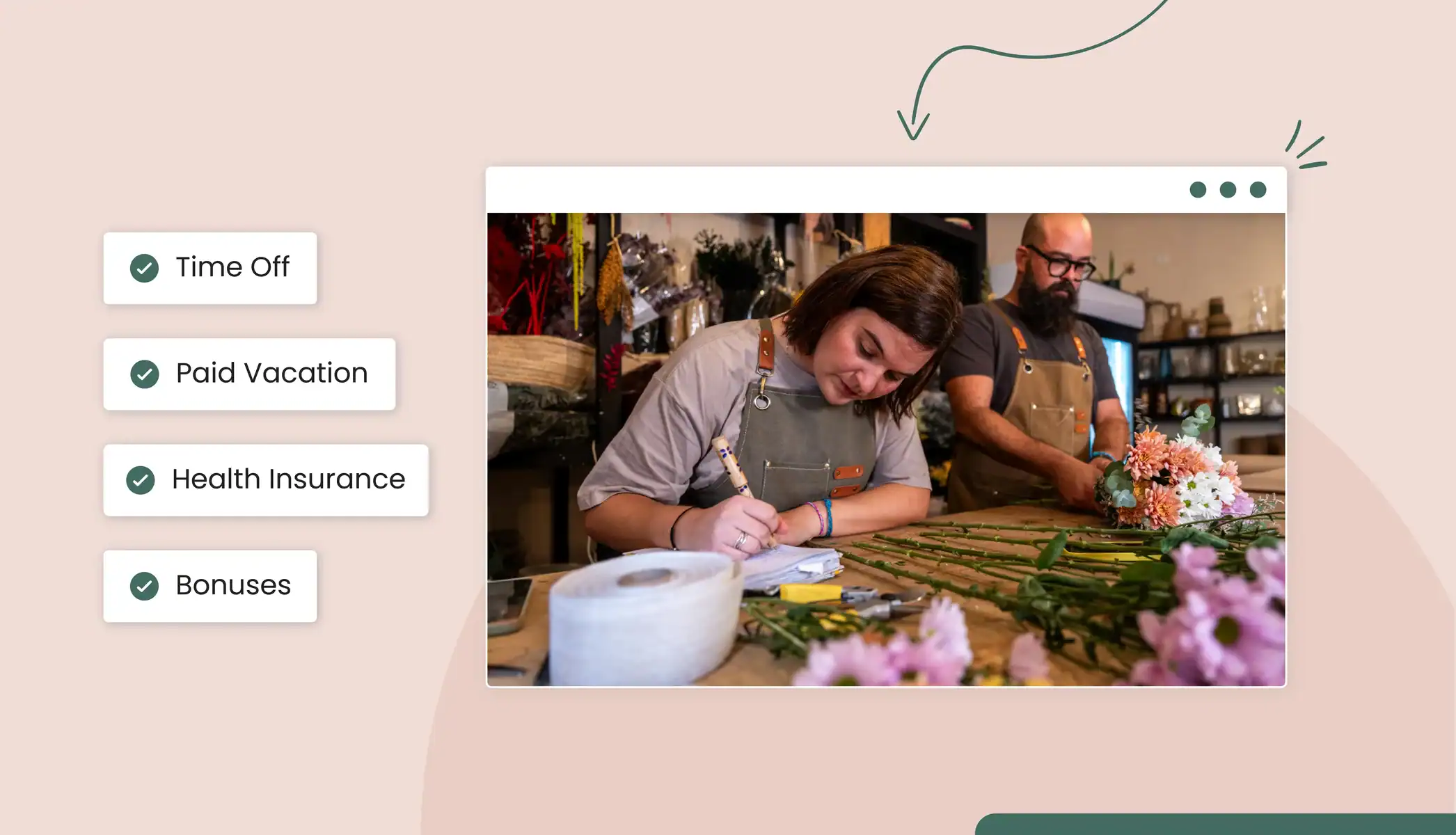
Have you ever Googled “employee benefits for small business” and closed the tab, being more confused than when you clicked on a result? You’re not alone. Business administration is one of those topics that sounds straightforward until you’re trying to figure out what’s legally required, what’s optional, and what it’s going to cost you.
Here’s the short version: some benefits are required by law, and others allow you to be more strategic in making choices that will attract and keep good employees. The truth is, both matter. This guide breaks down what small businesses must offer, can offer, and what can be expected in terms of cost.
What are employee benefits for small businesses?
Benefits are incentives employees receive beyond base wages. This includes health insurance, retirement plans, paid leave, and other perks. It also includes legally required contributions, which, to some employers, are not benefits because they are automatic.
Having a thriving business is the goal, but a small business benefits package doesn’t need to replicate the benefits of a Fortune 500 company. Why? Because it’s not realistic. What’s important is building an honest, compliant, and competitive benefits program that can attract qualified candidates you want to hire and great employees you want to keep. Benefits can and should scale as the business grows.
Which employee benefits are legally required?
Here are three benefits that are not optional:
Payroll tax contributions
Every employer, regardless of size, is mandated to contribute to Social Security and Medicare through FICA taxes. You will pay a matching portion of what’s withheld from employees’ paychecks. The business is also responsible for paying into federal and state unemployment insurance funds to provide wage replacement if an employee is laid off.
Workers’ compensation insurance
Most, but not all, states require workers’ compensation insurance once you have employees. This insurance protects workers injured on the job and protects your business from liability. There is no blanket provision. The requirements and premiums vary by industry and state, so it’s important to stay on top of this.
State-mandated disability or leave benefits
Some states go further than federal law, requiring employers to provide short-term disability coverage or participate in state-funded paid leave programs. States like New York, New Jersey, and California have specific mandates that apply regardless of business size. You can find more information on this from your state’s labor department website.
Just to be clear: health insurance is not mandated for small businesses with 50 or less full-time equivalent employees, but it’s always good to check your state’s individual requirements to make sure you are complying with the law.
What benefits can a small business offer employees?
Once the mandated pieces are in place, you’re able to offer benefits based on your industry, budget, and workforce you’re building.
Health insurance benefits for small businesses
Health insurance is one of the most requested benefits from employees at any level. As a small employer, there are a few options:
- Group health plans purchased through a private insurer
- Small Business Health Options (SHOP) marketplace
While health insurance benefits are not legally required for small businesses, offering them helps the business become more competitive in hiring.
Retirement benefit plans for small businesses
One of the most recognized retirement benefit options is the 401 (k). There are self employed retirement options, such as purchasing a solo 401(k). Or if you have less than 100 employees, you can opt for a SIMPLE IRA. Both options have tax advantages for employers that help offset the cost.
Paid time off
PTO is a huge benefit for small businesses. Employers that provide vacation days, sick leave, and personal days are included in this area. Although vacation time is not mandated at the federal level, there are several states that require a minimum amount of paid sick leave. This is a great way to create a culture where employees are happy about their employment.
Additional small business benefits package options
There is room for growth when building benefits packages. Depending on your budget and employee needs, you may consider adding:
- Dental and vision insurance
- Short or long-term disability insurance
- Basic life insurance
- Flexible spending accounts (FSA)
- Wellness programs
- Professional development stipends
Even if you’re just starting a small business, offering the right benefits helps attract and retain your existing and future workforce.
What are the top 3 most sought after employee benefits?
Research continues to show these same three benefits as being the most requested across the board, regardless of industry or workforce demographics.
Health insurance
For most workers, especially those with families or ongoing health needs, medical coverage is the benefit that carries the most weight. It represents financial security in a way that few other perks can match. The reality of medical debt in this country is not abstract, and employees know it. When a small business offers health coverage, it removes a significant barrier that would otherwise send candidates to larger employers.
Paid time off and flexible scheduling
Work-life balance has shifted from a buzzword to a tangible deciding factor. Employees want to know they can take a sick day without financial penalty or use vacation time without guilt. Flexible scheduling and hybrid work options are increasingly treated as benefits in their own right, especially among younger workers and parents. If you can offer flexibility without sacrificing productivity, it costs very little and signals a lot.
Retirement benefits
Long-term financial security is a growing concern across age groups, not just employees approaching retirement. People want to know their employer is helping them build toward something. Even a modest employer match on a 401(k) or SIMPLE IRA can tip the scales when a candidate is weighing other comparable offers.
Small business employee benefits costs
Cost is important when establishing where it will fit into your budget, as they vary based on state and type.
Mandatory benefit costs
Payroll taxes are probably the most predictable. FICA taxes require employers to match 7.65% of an employee’s wages (up to the annual Social Security wage cap). Then, there’s the Federal unemployment tax (FUTA), which is a small percentage applied to the first several thousand dollars of an employee’s wages. State unemployment rates vary from state to state, in addition to workers’ compensation premiums
Optional benefit costs
The largest optional benefit cost is health insurance. Employer costs change based on the type of plan, insurer, and location. Depending on your situation, employer contributions toward premiums can be higher or lower. Any retirement match contributions are calculated as a percentage of payroll, which makes this area scalable. When payroll goes up, contributions naturally go up, but there is usually some flexibility if you need to pause or reduce these types of benefits.
It’s important to factor in the administrative costs of having benefits, such as the software needed to implement and track these benefits, any broker fees attached to keeping things going, and compliance support. Depending on the provider you choose, you may be able to bundle these costs, which helps save money.
How benefit costs are typically structured
Most benefit costs are structured per employee per month, or a percentage of payroll. Employer and employee cost-sharing is normal for health insurance, but retirement costs are usually determined by the employer. It is advised to consider benefits as a part of the total compensation package rather than a separate budget category. This helps make clearer decisions.
How to build a small business benefits package
While it sounds good to say you have a strong benefits package, it’s best to start with what’s legally required and work from there. Once you’ve covered the mandated benefits, you’ll be able to have a better handle on what you can and can’t afford.
Most employers ask their employees what matters most, as employees have different priorities. For instance, some employees may opt for flextime over dental coverage, while others select better retirement options, rather than banking PTO hours. Once you have this information, prioritize the benefits that have the most impact and build your package from there.
Balancing competitive benefits with business sustainability
Overpromising and not following through on promised benefits is a risk. It’s no secret that cash flow constraints can severely impact an employer’s ability to deliver, and that quickly erodes trust. It’s important to include benefits as a long-term budget planning item from the beginning to allow normal increases as your team grows and revenue stabilizes.
What you need in place before offering employee benefits
A strong foundation should be in place before implementing a small business employee benefits package. These are the basics:
- A legal, registered business entity
- An Employer Identification Number (EIN) from the IRS
- Employer payroll tax accounts (both federal and state)
- Proper worker classification (employees vs contractors)
- A payroll system capable of handling deductions and contributions
- Clarity on your state’s specific benefit mandates
Tailor Brands helps entrepreneurs form their LLC and get an EIN to properly register as an employer before rolling out employee benefits plans. Formation is the beginning of building a strong employee benefits package, not the end. Benefits administration requires ongoing oversight and regular compliance checks. If you don’t have a dedicated team member to get this done, it’s best to contact a solutions provider that can help.
Conclusion
Some employee benefits are required by law, and skipping them is not an option. The rest are strategic decisions that signal what kind of employer you’re committed to being. Health insurance, paid time off, and retirement plans consistently rank as the most valued benefits because they address real financial concerns and quality-of-life needs.
While costs are also real, they are manageable once you have a good plan in place. A thoughtful, small business benefits package built in stages and regularly reviewed supports growth for your team and business. Take your time, start with compliance, and build from there.
FAQ
Payroll tax contributions, workers’ compensation in most states, and in some states, disability or paid leave benefits are all legally required.
No, health insurance isn’t mandated for businesses with 50 or fewer full-time equivalent employees, though state rules should still be checked.
Health insurance, paid time off with flexible scheduling, and retirement benefits consistently rank as the most valued by employees.
FICA taxes require a 7.65% employer match on wages, alongside federal and state unemployment taxes and workers’ compensation premiums.
A registered business entity, an EIN, payroll tax accounts, proper worker classification, and a payroll system capable of handling deductions.