
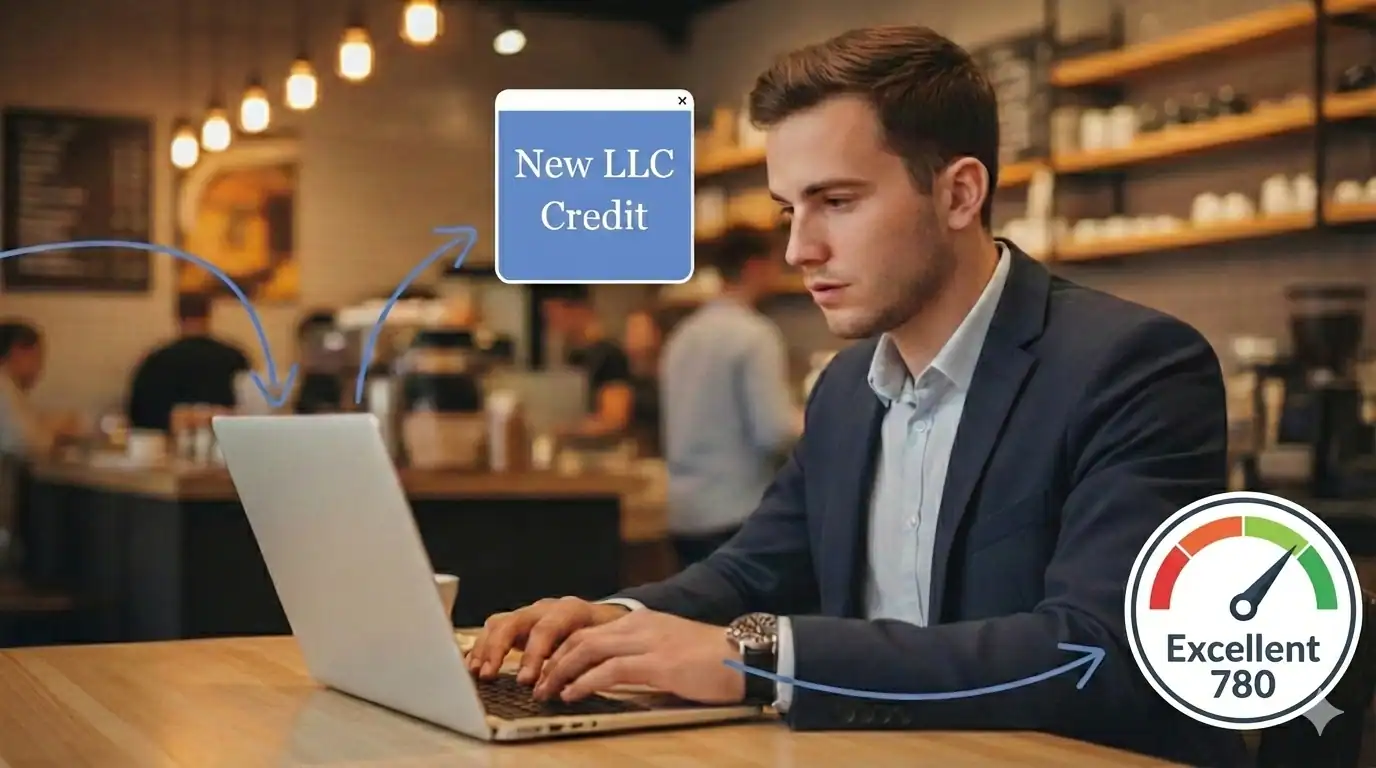
Creating a Limited Liability Company (LLC) is one of the most important moves for a growing business. Yet, many people are under the misconception that creating an LLC creates credit. That is not the case.
There’s often confusion between personal credit and business credit, including how they work and how to go from “no credit” to “good credit” as a business owner. Let’s take a closer look at all of these factors and clear up the confusion.
To start, new LLCs typically start with no credit history. You’re a new business. Credit scores build over time through lending, on-time payments, and making wise financial decisions.
That means that, while your LLC does not have a credit history or score immediately after you open it, you can learn how to build an LLC credit score from the ground up. Here’s what to expect from the process.
What credit score does an LLC start with?
A new LLC starts with no credit score. There is no default credit score. There’s no “starter” score. The formation of your business structure has nothing to do with the establishment of a credit history. No creditors have reported activity yet.
That doesn’t mean you have bad credit. Lenders have no idea if you are a high risk or a safe bet. But you can grow your credit history with the financial decisions you make. Forming an LLC does not contribute to that process, though.
Does starting an LLC business come with credit?
It is a common misconception that once you form an LLC, you automatically create credit. That’s not what forming an LLC does for your business.
When you open an LLC, you create a legal structure for your company. This process creates a new entity recognized by the government and others. It also separates your business income and expenses from your personal income and expenses. It’s the legal recognition of a new entity only.
An LLC can build credit, but that takes time. Credit must be earned through activity. That includes buying on credit, establishing a payment history with vendors, and demonstrating on-time payments for loans.
So, why do people think that an LLC has credit to start? It could be because LLCs receive a lot of attention from lenders who want to provide business loans and credit opportunities. LLCs with positive cash flow and revenue often will see lenders approach them to offer credit.
Just remember, opening an LLC does not give you a credit score of any type. It simply forms a legal entity. What you do from here on out contributes to your business credit score.
Do LLCs have credit scores at all?
Credit scores for businesses are very different than your personal credit score. A business credit profile is not represented by a single number like your personal credit score. Instead, it’s a collection of data reported to the business credit bureaus about your company. If you have never borrowed, set up a credit account, or created a credit-based vendor agreement, you don’t have a credit profile just yet.
Credit only exists once some lender reports activity. Until then, you don’t have a profile for your LLC. Once you establish your LLC and Employer Identification Number (EIN), you may then start applying for credit or creating vendor agreements. You don’t have to, but many business owners choose to do so to increase cash flow or make important purchases.
What “no credit score” means for a new LLC
If your business does not have a credit score, you may be unsure how to move your company forward and secure those loans. Just like with your personal credit score, it takes time and work to establish and build a business credit profile.
Having no credit differs from poor credit. With poor credit, you have an established profile that shows you have not made financially wise decisions or proven your creditworthiness as a business. With no credit history, no one has given you that chance yet.
So, how do lenders decide whether to lend to a new LLC without a business credit profile? They use your personal credit score as an early decision-making tool. Your personal credit provides lenders with insight into how well you manage your money, and the premise is that you likely carry those same principles of on-time payment and good financial management into your business.
However, it’s important to be realistic. Lenders know there is a very big difference between personal and business credit and aren’t going to simply write a big check if you have a good personal credit score. Approval and terms differ for each lender, but most look at the bigger picture, considering business revenue, cash flow, and other obligations.
Can a new LLC get credit?
Yes, LLCs can get credit, but their options are usually limited. Unproven, your business needs to demonstrate in some way that you can manage credit wisely. Lenders will consider other factors to understand this early on, such as your personal credit score, revenue coming in, expense management, and overall cash flow.
What does that mean for you as a new LLC that needs credit?
- The owner’s personal credit will be a big factor in determining your ability to obtain a loan.
- You may need or benefit from a personal guarantee or some type of collateral-backed loan.
- Expect smaller credit limits and less access first. Use those early opportunities to build credit over time.
Here’s what’s really important to know. All businesses start the same. It’s normal for new businesses to face limited credit access.
How LLC credit is created over time
Building credit takes time, and for an LLC, you can control the outcome by making wise decisions. Take the time to learn about credit and the importance it has on your business’s growth over time. To build credit, focus on the following:
- Create a consistent business identity. Use the same name and contact information. Having an LLC helps to do this. Be sure you’re using your EIN as necessary.
- Reported payment activity builds over time. That could include your lease on your location, utility providers, and initial lender agreements.
- Time and repetition build a solid credit profile. That means you need to borrow and have financial activity reported to see growth in your credit profile.
Keep in mind that not all of your vendors or accounts report this information. If you’re considering a new vendor agreement, ask them about their practices in these areas.
How to build an LLC credit score responsibly
You have a fresh start to build an LLC credit score. Put the time and effort into building a positive score with these tips.
- Keep business and personal finances separate. This is a critical step in building your business in all areas. Have separate bank accounts for business and personal transactions.
- Pay obligations you have on time. Even if they don’t seem to be an outright debt obligation, vendor payments and lease agreement payments can matter over time.
- Use credit when you need to, but don’t overdo it. Stretching yourself too thin is worrisome to lenders. Instead, use credit intentionally when needed.
Give the process time and be patient. With consistency, you’ll be able to create a stronger financial portfolio for your business.
Personal credit vs LLC credit for new businesses
Remember that we mentioned the use of your personal credit to qualify for business credit? That’s one of the most important steps for a new LLC to recognize. If you have not done so, work to improve your personal credit. It could open doors for new business lending.
Most often, business credit isn’t an important element of your company early on. Rather, as your company grows and you want to scale through the use of business loans, that’s when these portfolios become critical.
Keep in mind, too, that creating an LLC does not mean that you eliminate your personal responsibility in these loans. Many business loans are backed by your personal assets. They can impact your personal credit history if you used your Social Security Number to obtain them.
Preparing your LLC to build credit the right way
Ready to get started? To build credit for your LLC, follow these strategies. Create a strong foundation for success.
- Proper LLC formation is a must. Establish your LLC and ensure that you immediately separate personal and business transactions, assets, and debts.
- Obtain an EIN. This is the way lenders and the government recognize your business. It helps in building your business credit profile.
- Establish business financial accounts. This should be where you manage all payments going out and revenue coming in. Make it clear that your business is paying you.
- Use your business information consistently. EINs, addresses, names, and all details should always be the same from one application to the next contract.
- Keep all of your records organized. Use software to help you and establish a relationship with an accountant.
Having a properly formed and well-organized LLC helps create the foundation for building business credit over time. Lenders and credit bureaus rely on consistent business information, separation of finances, and legitimate records.
Common misconceptions about the new LLC credit
Don’t make these misconceptions or let them influence your financial decision-making:
- “My LLC has credit as soon as it’s formed.” Forming your LLC does not create a credit profile for your company.
- “No credit is the same as bad credit.” That’s not the case. Lenders are more likely to lend to unproven borrowers with supportive data.
- “An EIN replaces personal credit.” The two have nothing to do with each other. Your personal credit remains in place, separate from your business, once you create an LLC. An EIN alone does not do this.
It’s certainly confusing, but recognize that, as a new LLC, you don’t have a proven track record. You do have the opportunity to build it.
Conclusion
When you start a business, new LLCs begin with no credit score. That’s normal and expected. Forming an LLC creates a legal foundation for your company, not an instant financial reputation. Credit is built through action, not paperwork. Over time, the financial decisions you make, opening accounts, paying obligations on time, using credit responsibly, and maintaining clear separation between personal and business finances, shape your LLC’s credit profile.
The good news is that starting with no credit puts you on equal footing with every other new business. With patience, consistency, and smart financial management, you can establish strong business credit that supports growth, improves access to funding, and strengthens your company’s long-term stability. Understanding how LLC credit really works allows you to set realistic expectations and take intentional steps toward building a solid financial future for your business.
FAQ
A new LLC starts with no credit score, since credit is built over time through activity like on-time payments and vendor agreements, not by forming the entity itself.
No, forming an LLC only creates a legal business structure and doesn’t generate a credit profile on its own.
No, no credit means no track record has been established yet, while bad credit reflects an existing history of poor financial decisions.
An LLC can build credit by keeping business and personal finances separate, paying obligations on time, and using credit responsibly through vendor and lender relationships.
Since a new LLC has no credit profile yet, lenders often rely on the owner’s personal credit as an early indicator of financial responsibility.