
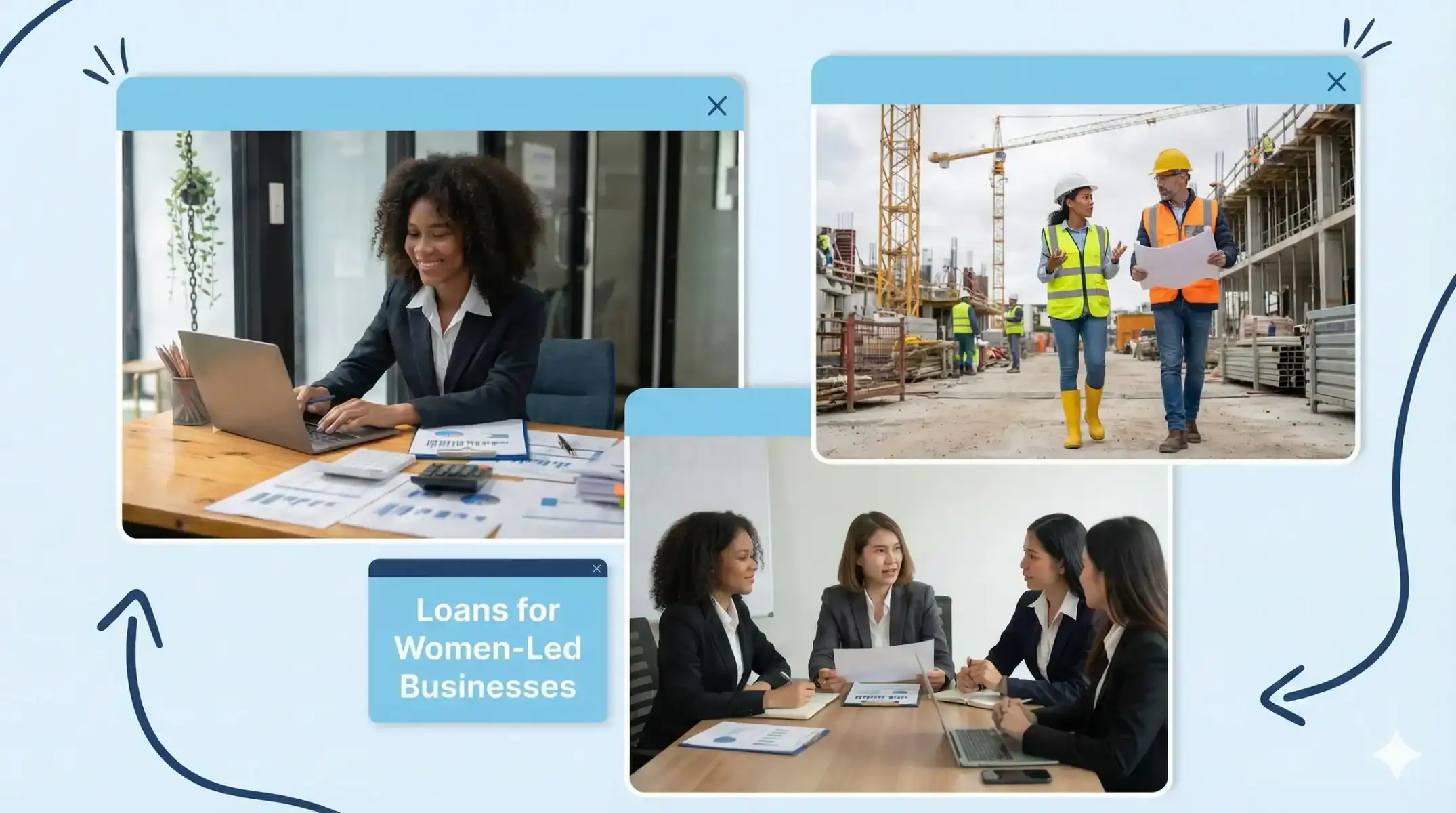
After years of men dominating the modern business world, women are reshaping business in new and exciting ways. It’s impossible to get a good picture of what’s happening in the business world without taking into consideration the changes women are making.
As of 2024, there were 14.5 million women-owned businesses, making up almost half the total. Businesses owned by women bring in a stunning $2.7 trillion in annual revenue and employ about 11 million people. Those numbers reflect a 17.1% growth between 2019 and 2024, and there is no reason to think those numbers will slow.
Unfortunately, women face unique challenges that men don’t when it comes to funding their own businesses. Even when the same resources are available, significant roadblocks often arise when it comes to equal access. Even though there are substantial challenges to obtaining loans for women business owners, there are ways to prepare to get things on a level playing field.
What are small business loans for women?
Business loans for women-owned businesses are essentially the same as business loans for men-owned businesses. A business loan is different from other kinds of loans because of its purpose. Business loans can be used to meet long- and short-term goals, including everything from equipment to payroll to supplies.
As with any other loan, there are requirements for someone wanting to take out a business loan.
- Lenders will look at a borrower’s credit score to ensure that the borrower is trustworthy and likely to repay the loan. 680 is considered a good score, but some people may simply not have much credit history yet. The lender may relax standards for equipment loans or lines of credit.
- What is the annual revenue of the business? Lenders prefer applicants show at least $50,000 to $200,000/year.
- Many lenders prefer that the business has been operating for at least a year or two.
- Debt-to-income ratio (DIR) may be an important factor.
Some lenders prioritize women-owned businesses because they want to help them succeed. However, loans are not based on gender alone, and it is important to understand the factors that lenders consider.
What challenges do women face when applying for business loans?
Women face more challenges than men when it comes to getting business loans, but the reasons are complicated. In general, women may experience lower average loan approval rates, with small amounts approved. They may need to depend more on personal credit, which usually means smaller resources.
Common types of business loans women entrepreneurs use
Business loans for women usually fall into a few categories, and may be more available depending on the factors discussed earlier.
SBA loans for women-owned businesses
SBA loans are some of the most popular types of business loans for both men and women. The U.S. Small Business Administration makes it easier for small businesses to get the funding they need while offering more attractive terms. With an SBA-backed loan:
- Borrowers generally enjoy competitive terms, with rates and fees that are comparable to non-guaranteed loans.
- The SBA provides support in the form of counseling and education to help individuals manage their businesses.
- Borrowers may have lower down payments or may even have no collateral requirement for some loans.
- Overhead fees may be low.
The SBA recognizes that women are less likely to use bank loans than men, often depending instead on other forms of capital. An SBA loan may be through one of many lending institutions.
Traditional bank small business loans
Most loans for women-owned businesses are traditional business loans through traditional banks. When considering whether and how much money to lend a business, traditional banks are generally objective and consider standard factors such as credit score, length of time the business has been in operation, collateral, and revenue history. Approval can be more difficult for new businesses because they don’t have a history to show.
Online business loans
Online business lenders operate differently from brick-and-mortar lenders, and it is important to consider the advantages and disadvantages. Online loans may seem easier because you can do the entire process online, but there are important differences:
- Traditional lenders tend to have lower interest rates; even if the rate starts low for an online lender, it tends to become higher.
- The traditional process is slower.
- Online lenders have an easier approval process and looser eligibility.
- The ease and simplicity of the online process may not make up for the higher rates and fees.
Microloans and community-based loans
The average SBA microloan is about $13,000 and terms may vary, but these are smaller business loans for more specific purposes.
What lenders look for when evaluating women-owned businesses
Several lenders and programs focus on assisting women in obtaining small business loans, but eligibility will depend on business readiness, not gender. Here are some of the specific factors these lenders will consider when deciding how to assist women-owned small businesses:
- What is the credit history of the business, or in the case of a sole proprietorship or partnership, the owner(s)?
- What is the history of income and cash flow/projections?
- How has the business utilized funds so far?
- What kind of business is it, and what is the industry risk?
Examples of bank programs supporting women business owners
Some banks recognize that women-owned businesses have a lot to offer but need additional encouragement. Some large banks offer initiatives designed to expand access to capital for women-owned businesses. While they still require these women-owned businesses to meet regular criteria to qualify for loans, they may assist so that these women entrepreneurs understand the best way to present their business. The programs may include additional resources, including education, networking, or dedicated lending pathways.
KeyBank – Key4Women
Another example of a program focused on loans for women-based businesses is the Key4Women program through KeyBank. With a focus on women entrepreneurs, participants who qualify will have access to educational resources, mentoring and networking, and retirement advice.
Huntington Bank – Lift Local Business
The Lift Local Business program has the objective of building stronger communities by supporting small businesses, with loans designed for normally underserved borrowers, including women, minorities, and veterans. If they qualify for the program, borrowers in these communities can take advantage of favorable terms and free financial entrepreneurial courses offered through Operation HOPE.
Bank of America – Access to Capital
Bank of America has loans geared toward startups or small businesses, with a focus on encouraging and promoting both new ideas and growing concerns. The program offers opportunities that may not otherwise be available, along with education, so that individuals understand different funding methods. Loans for women business owners still have to go through the regular approval process.
Preparing your business before applying for a loan
So what can women do to improve their chances at getting small business loans with favorable terms? Preparation is key because business credibility will go a long way in convincing potential lenders that your business will be successful.
When starting a new business, it is vital to choose the correct business structure that works for you. Most people choose to open an LLC because it provides the right amount of risk and benefit. When applying for a business loan, you will make a better impression if you can show that you have set your business up properly and have an EIN and a business bank account. Proper business records will not guarantee the loan you want but will improve your credibility.
Alternatives if business loans aren’t the right fit
There may be a multitude of reasons that loans aren’t the right fit for your business. This can be based on factors such as how new your business is, who is currently depending on you, and your current tolerance for risk. Here are some other ways that women successfully fund their small businesses.
- Many businesses and organizations offer small business grants. If you apply and receive a grant, you won’t need to pay it back.
- Crowdfunding is a method used for many kinds of projects and needs, where you can ask for funding from an unlimited number of people online.
- With bootstrapping, entrepreneurs start their businesses using their own personal resources. This won’t work for everyone, but anyone who uses this method will have total control over business decisions as they won’t answer to outsiders.
- Some individuals can get funding from friends and family.
You can also use a combination of these methods, including loans.
Conclusion
Women are resourceful and already use different funding paths when they start a business and build their small businesses. Small business loans for women are just one source of possible funding, but they can be used more than they are currently. With the right knowledge and preparation, women can overcome former obstacles and take advantage of additional sources of funding to help them succeed even more.
FAQ
As of 2024, there were 14.5 million women-owned businesses, generating $2.7 trillion in annual revenue and employing about 11 million people.
No, the loan products themselves are the same, but women often face more challenges with approval rates and access to capital.
Lenders consider credit score, annual revenue, time in business, debt-to-income ratio, and how funds have been used in the past.
An SBA loan is backed by the Small Business Administration, offering competitive terms and lower collateral requirements, which can help women who rely less on traditional bank loans.
Setting up a proper business structure like an LLC, getting an EIN, opening a business bank account, and keeping organized records can improve credibility with lenders.