
If you’ve ever felt lost the moment someone starts talking about balance sheets or cash flow statements, you’re not alone. Accounting has a reputation for being complicated and confusing. It’s easy to assume that it’s something only professionals can fully understand. But in reality, businesses of all sizes, from solo freelancers to major enterprises, rely on accounting in some form.
The good news is that accounting doesn’t have to be intimidating. At its core, it’s just a way of understanding what’s happening with your money.
This guide breaks down what accounting actually is, what it involves day to day, and the main types you’ll encounter as a small business owner.
What is the simple definition of accounting?
Accounting is the process of recording, organizing, and understanding a business’s financial transactions.
At the most basic level, that means keeping track of money coming into your business (income) and money going out (expenses), then turning that raw data into information you can act on.
It’s also worth separating accounting from the idea of taxes. It’s true that accounting supports tax preparation, but that is just one aspect of the process. More broadly, accounting helps you answer everyday questions such as whether your business is profitable and where most of your money is going.
What does accounting actually involve?
Accounting involves a set of ongoing activities that work together to give you a full understanding of your business’s finances. These activities are:
Recording transactions
Every time money moves, a customer pays an invoice, you buy supplies, you pay rent—that transaction needs to be recorded. This is often called bookkeeping, and it’s the foundation everything else is built on. Without accurate records, nothing that follows is reliable.
Organizing financial data
Raw transaction data isn’t especially useful on its own. Organizing means categorizing those transactions based on where the money is spent. For example, this might mean separating marketing expenses, payroll expenses, and rent. Proper categorization makes it much easier to spot patterns, identify problems, and generate useful reports later.
Summarizing and reporting
Once transactions are recorded and organized, the next key accounting step is to produce reports that summarize your financial picture. The three most common are:
- Income statement: Shows revenue, expenses, and whether you’re profitable over a given period.
- Balance sheet: Shows what your business owns (assets), what it owes (liabilities), and what’s left over (equity) at a specific point in time.
- Cash flow statement: Tracks the actual movement of cash in and out of the business.
These reports aren’t just for accountants and lenders. As a business owner, they’re some of the most useful tools you have for understanding where things stand. These financial statements generally follow standardized formats defined by accounting frameworks such as GAAP or IFRS, especially when prepared for external reporting.
Analyzing financial performance
Once you’ve organized all your financial data into easy to understand reports, it’s time to use that data to surface insights that will help guide business decisions. Should you raise your prices? Cut a particular expense? Invest in new equipment? Financial data helps you answer those questions with evidence instead of guesswork. That’s why good accounting supports better decision-making just as much as it does record-keeping.
Why accounting is important for small businesses
It’s easy to think of accounting as an administrative, just something you deal with at tax time and otherwise ignore. But for small business owners, consistent accounting does several things that matter throughout the year:
- It shows whether your business is actually generating profit, not just revenue.
- It tracks where money is going so you can control costs.
- It keeps you prepared for tax filing without a last-minute scramble.
Whether you’re just beginning to start a business or are already growing operations, without accounting, it becomes difficult to understand how your business is performing, or whether it’s sustainable.
Types of accounting
Not all accounting serves the same purpose. Different types exist to handle different needs, and as a small business owner, you’ll likely encounter more than one.
Here are the main types of accounting that you should be aware of:
Financial accounting
Financial accounting focuses on producing reports intended for outside audiences like lenders, investors, or regulatory bodies. Income statements, balance sheets, and cash flow statements are all products of financial accounting. These reports follow standardized formats so that outside parties can evaluate a business’s financial position.
Small business owners are less likely to need this form of accounting compared to others, but it may be necessary if you have investors or lenders.
Managerial accounting
While financial accounting looks outward, managerial accounting looks inward. It’s used internally to support business decisions. Things like budgeting, forecasting, and performance analysis are the types of processes that managerial accounting assists with. You won’t typically share this information with anyone outside your business, but it’s invaluable for planning and day-to-day management.
Tax accounting
Tax accounting focuses specifically on preparing and filing taxes in compliance with state and federal laws. It often involves rules that differ from standard financial reporting, which is why some businesses work with a tax professional separately from their general accountant.
Cost accounting
Cost accounting focuses on what it actually costs to produce your goods or deliver your services. It’s especially useful for businesses that manufacture products or manage complex services. Understanding your true costs helps with pricing decisions and identifying where you might be losing money.
Project accounting
For businesses that operate on a project-by-project basis (such as contractors, consultants, and agencies), project accounting tracks the financial performance of individual projects. This helps you see whether a specific project was profitable and identify where costs ran over.
Accounting vs bookkeeping: what’s the difference?
These two terms are often used interchangeably, but they’re not the same thing.
Bookkeeping is the practice of recording financial transactions. It simply means logging every sale, expense, and payment. Accounting is much broader. It includes bookkeeping, but it also includes the analysis, reporting, and interpretation that turns those records into useful information.
Think of bookkeeping as the data entry side of accounting, and the rest of accounting is what you do with that information.
How accounting works in a small business
Most small businesses don’t have a dedicated accounting department. In practice, accounting at the small business level usually involves some combination of:
- Manual tracking or spreadsheets
- Small business accounting software like QuickBooks or Wave
- Occasional help from a professional accountant or bookkeeper when things get complex
The day-to-day process typically looks like this: transactions are recorded as they happen, categorized into the right expense or income types, reviewed periodically through reports, and used to prepare for quarterly estimated taxes or annual filing.
The most important thing to understand is that accounting doesn’t need to be complex at the start. Staying consistent with basic record-keeping from day one is far more valuable than having a complicated system you can’t maintain.
Common accounting terms to know
You don’t need an accounting degree to run your finances, but a handful of terms come up constantly and are worth knowing:
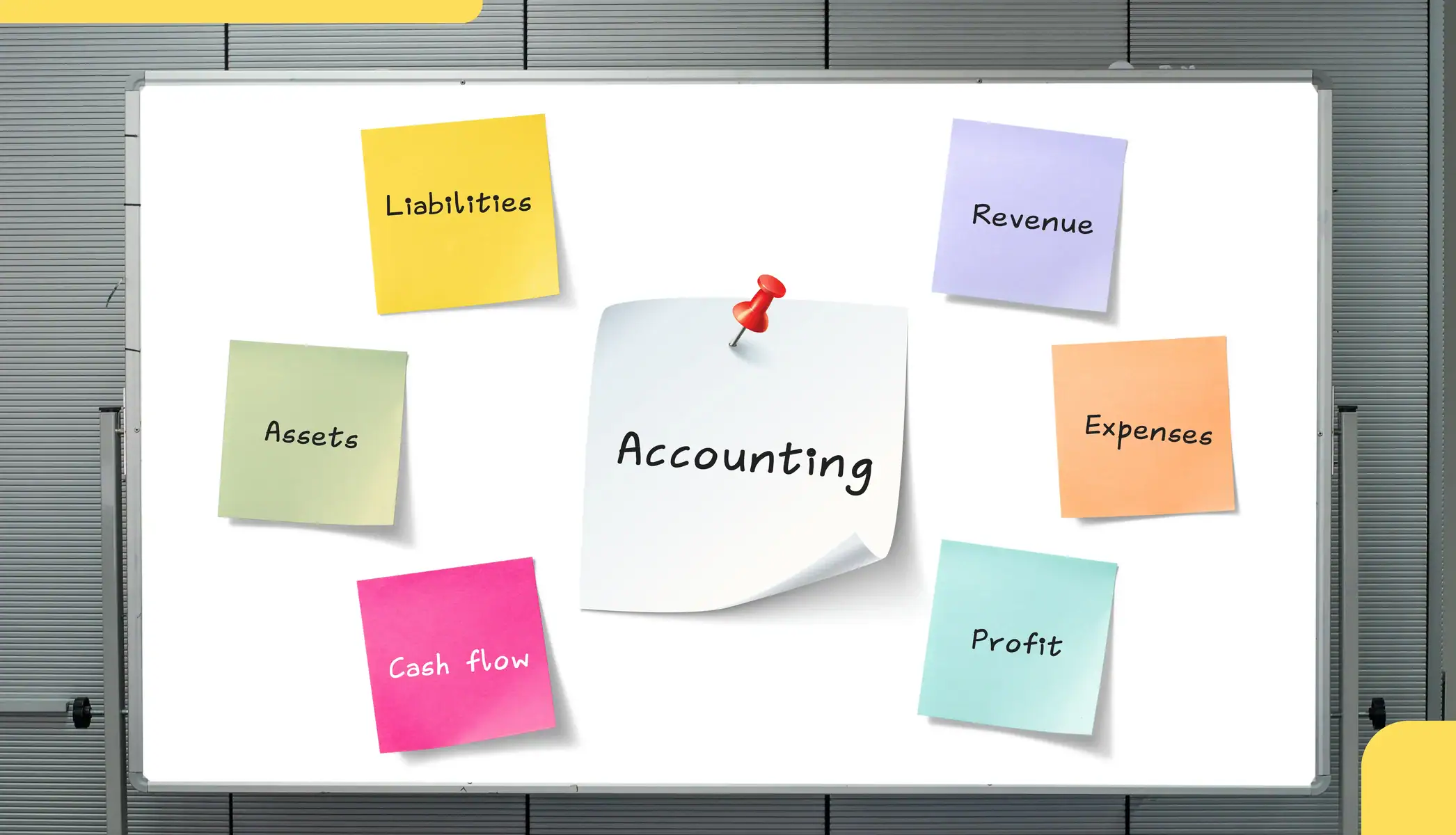
- Revenue: The total money your business earns before expenses are deducted
- Expenses: The costs your business incurs to operate
- Profit: What remains after expenses are subtracted from revenue
- Cash flow: The movement of money into and out of your business over time
- Assets: Things your business owns that have value (equipment, inventory, cash)
- Liabilities: Money your business owes (loans, unpaid invoices, credit balances)
Understanding these six terms will put you well ahead of most first-time business owners when it comes to reading financial reports.
Common accounting mistakes beginners make
There are a few accounting mistakes that new business owners tend to encounter:
- Mixing personal and business finances: Using the same bank account for personal and business transactions makes accurate record-keeping nearly impossible. Be sure to keep them separate from the start.
- Not tracking expenses consistently: Expenses logged once a week are manageable. Expenses reconstructed from six months of receipts are a nightmare.
- Ignoring financial reports: Generating reports is only useful if you actually read them. Even a monthly review of your income statement can help you catch problems early.
- Waiting until tax time to organize records: Tax season should be the finish line, not the starting gun. Businesses that scramble to organize records at the last minute before taxes are due are almost always working with incomplete information.
Small mistakes in accounting have a way of compounding. Catching them early is much easier and less expensive to fix than trying to untangle them later.
Preparing your business for proper accounting
Accounting is significantly easier when your business is set up correctly from the beginning. Here are a few foundational steps that will make a real difference:
- Choosing a business structure: Many business owners decide to create an LLC, or sole proprietorship, or S-Corp. Which one you choose will affect how your finances are reported and taxed.
- Obtaining an EIN: An Employer Identification Number (EIN) is required for tax purposes and for opening a business bank account.
- Opening a dedicated business bank account: This is important for keeping your business finances and personal finances separated.
- Keeping financial records organized: Whether in software or physical files, good organization matters.
Platforms like Tailor Brands can help with several of these early steps, including business formation, managing essential documents, creating invoices, and tracking payments in one place. These tools are useful for getting organized and staying on top of the administrative side of running a business. They’re not a substitute for professional accounting advice, but they can make it much easier to keep your financial records in order.
Conclusion
At its heart, accounting is the practice of understanding and managing your business’s finances. It includes recording transactions, organizing data, generating reports, and using that information to make better decisions. It’s much more than just a tax requirement, and can instead be one of the most valuable tools that a business owner has.
Even a basic approach to accounting can make a significant difference. It helps you stay organized, make informed decisions, and build a more sustainable business.
The key is to start simple and stay consistent. Over time, as your business grows, your accounting practices can grow with it.
FAQ
It’s the process of recording, organizing, and understanding a business’s financial transactions to see what’s happening with its money.
Bookkeeping is simply recording financial transactions, while accounting includes bookkeeping plus the broader analysis, reporting, and interpretation of that data.
Main types include financial, managerial, tax, cost, and project accounting, each serving different internal or external purposes.
The three most common reports are the income statement, balance sheet, and cash flow statement.
Common mistakes include mixing personal and business finances, inconsistent expense tracking, ignoring financial reports, and waiting until tax time to organize records.