

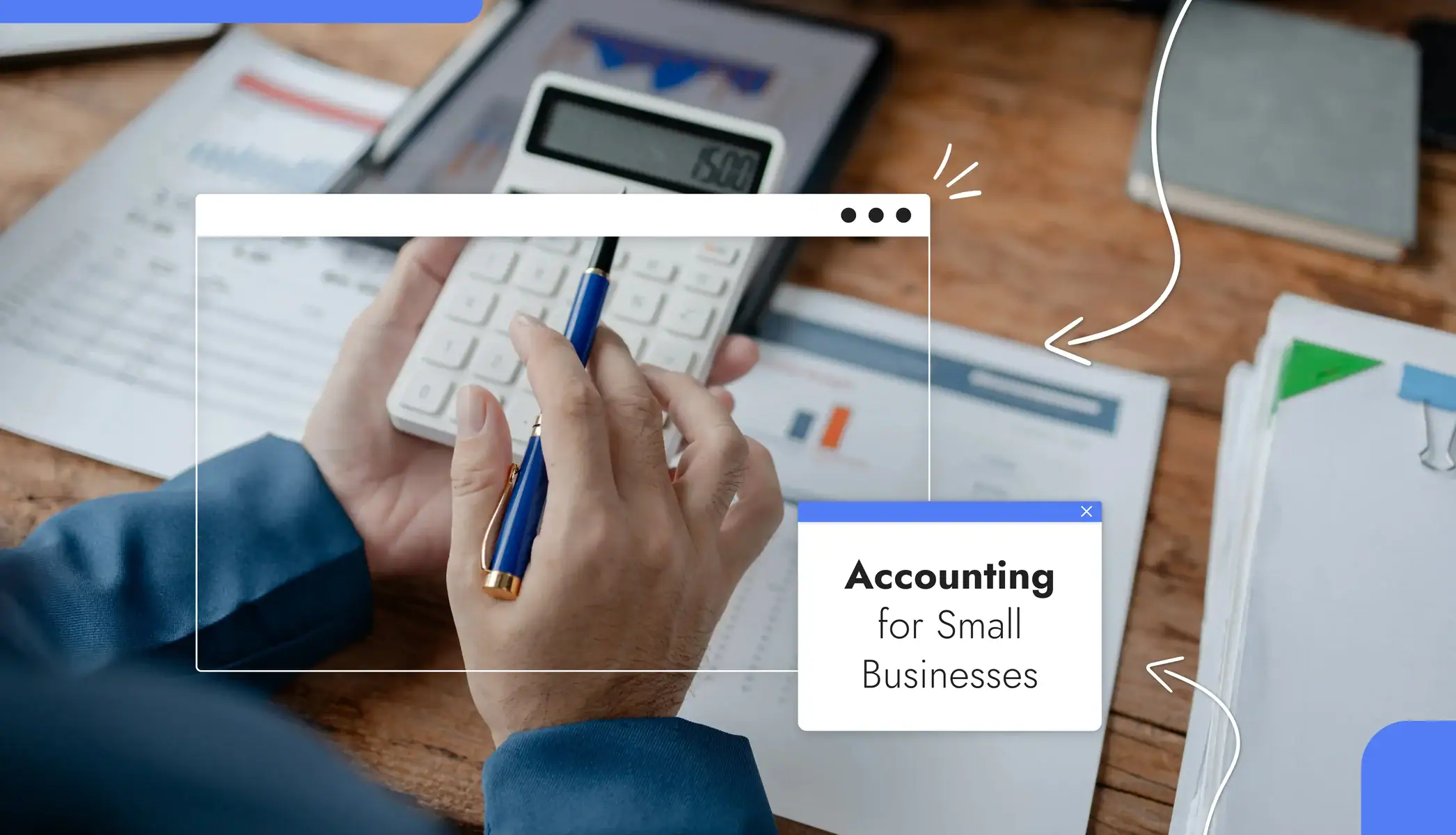
Accounting isn’t just for tax season. This should be a year-round priority for any small business owner. Accounting shapes how businesses are set up and how they make key financial decisions. It allows small business owners to do more with less, providing a clear view of where money goes and where adjustments are required.
Small business owners who maintain accurate and consistent records find it easier to control costs and manage cash flow, and yes, accounting practices can also make tax season feel like less of a headache.
Despite all these advantages, many small business owners struggle to get started with accounting, simply because it’s confusing or feels intimidating. Much of this struggle comes down to choosing between three main accounting approaches:
- Tackling accounting in-house with manual, DIY strategies.
- Using dedicated accounting or bookkeeping software solutions.
- Hiring an accountant — either in-house or working with an outside accounting firm.
These approaches differ in terms of cost and timing, but all three still cover the same core accounting functions: tracking income, revenue, and expenses while also keeping on top of tax and compliance concerns. In this guide, we will describe what, exactly, is tracked through small business accounting. Use this information to help choose the setup that works best for your business.
What is small business accounting?
Small business accounting determines how business-related financial transactions are tracked, recorded, and analyzed. This details how much money comes into a small business and how much goes out while providing an overall glimpse into financial health and stability.
Accounting includes many financial activities beyond simply recording transactions. Core functions include invoicing, financial forecasting, and payroll processing. Accounting also involves the creation of detailed financial statements, which provide valuable insight into business performance, including cash flow and profitability. Together, these practices support sound financial decision-making, ultimately streamlining tax filings and allowing businesses to remain organized and compliant.
Why accounting matters for small businesses
Small businesses face many financial challenges: unpredictable cash flow, supply chain fluctuations, and staffing issues. Many lack the funding or resources that help larger companies absorb these pressures. Accounting allows small business owners to make the most of each and every dollar, helping them analyze spending and use those insights to reduce waste. Patterns observed through consistent accounting practices help small business owners make informed decisions that drive long-term stability.
What small business owners need to keep track of
Small business owners juggle a wide range of financial transactions and details on a daily basis, but this effort should not feel reactive. Rather, business owners benefit from systematic practices that clarify how money is made and spent. Key elements include:
Income and revenue
Income includes all money that comes into the business, typically through sales or services. This may include one-time payments (from individual customer purchases, for example) along with recurring income (from customer subscriptions, monthly memberships, or other ongoing contracts).
By organizing revenue, business owners get a better sense for which offerings most reliably deliver income and where additional opportunities for growth might be available. Organization can be improved by categorizing income streams and by tracking the what, when, and who of income: what type of work leads to revenue, when that revenue is received, and who payments come from.
Expenses
Expenses involve the money that flows out of a business. Although many small business owners strive to reduce these (for example, through business tax write offs), it’s worth acknowledging that expenses serve a critical purpose: they help businesses tackle the practical needs that keep things running smoothly on a day-to-day basis. These expenses could include rent, utilities, employee wages, software, or inventory.
Although necessary for operational purposes, expenses can cut into cash flow and could potentially reduce profits. For this reason, they must be carefully tracked, with small business owners confirming that all expenses are justified and that they do not undercut long-term financial health.
Cash flow
Cash flow determines how money moves in and out of businesses. This is strongly influenced by timing, revealing when cash is received or when it’s spent. This becomes a point of concern when business owners need to pay employees or suppliers before enough funds have been collected from customers or clients.
If more money moves into the business than out at a given time, the cash flow may be described as positive. A negative cash flow emerges as more money leaves the business than comes in. With a negative cash flow, a business could appear profitable on paper but still struggle to pay bills or meet payroll requirements.
Taxes and obligations
Small businesses are responsible for paying federal, state, and local taxes. Many small business owners pay quarterly estimated taxes because, unlike traditional employees, entrepreneurs’ taxes are not automatically withheld throughout the year. These quarterly taxes may be outright required, but they can also be personally helpful, as they distribute tax obligations evenly across the year so that business owners are less likely to face huge annual tax bills.
Other compliance obligations could include fees for licenses and permits. Some small businesses may also need to abide by industry-specific regulations and reporting requirements.
Financial reports
Financial reports provide a helpful snapshot of an organization’s financial position and performance. These detailed reports turn everyday transactions into organized summaries, showcasing what businesses earn and spend. Done right, financial reports help owners spot trends, understand cash flow, and make informed decisions about budgeting, pricing, and long‑term planning.
- Income statement. Detailing revenue, expenses, and net income, the income statement provides the best way to confirm whether your business has actually made a profit in a given period of time.
- Balance sheet. It’s important to understand how to make a balance sheet because by offering a snapshot of financial stability and solvency at a given point in time, the balance sheet highlights current assets (what the business owns), liabilities (what the business owes), and equity (the owner’s investment along with retained profits).
- Cash flow statement. Documenting how cash flows in and out of businesses during different periods, the cash flow statement details operating activities while showing whether businesses generate enough cash to cover their expenses. This moves beyond profit figures to show the big picture of financial health.
Doing your own accounting: what to keep in mind
At the outset, many small businesses handle their own accounting. The appeal is clear: minimal upfront costs — a definite perk for early-stage businesses with limited financial resources. This can take considerable effort, however, and many business owners, simply put, lack the time or expertise needed to maintain consistent and accurate records. Success with DIY accounting means following these key steps:
Choose an accounting method
Cash accounting — functions a lot like a personal checking account, recording money when it actually moves. This may be easier for business owners to understand because it emphasizes cash on hand.
The accrual method — is better compared to a promise system, detailing when money is earned rather than when it’s received. Although it may seem more complex at the outset, this method actually provides a more accurate picture of financial health, as it offers insight into both income and obligations.
In general, cash accounting is the best option when first starting a business, while the accrual method begins to feel more useful as business operations scale or grow more complex.
Stay organized from the start
Organization is essential, no matter the preferred accounting strategy. This applies even when using professional accounting services. After all, dedicated accountants still need receipts, invoices, and other documentation, which is located and submitted by the small business owner. Consistent organization limits the stress of tracking down elusive documents, especially during tax season.
Begin this organization effort by establishing a centralized location for financial documents. This should be clearly labeled and categorized so that all documents are easy to find and retrieve. Get into the habit of saving receipts immediately and uploading them to a preferred file or folder. Commit half an hour per week to filing new documents and updating records so they remain organized far into the future.
Separate business and personal finances
Clear boundaries should separate business and personal funds. Limited liability companies (LLCs) rely on separate financial records and activities to avoid a phenomenon known as piercing the corporate veil. This happens when courts ignore the liability protection typically granted to corporations or LLCs.
Separation limits the need to sort or itemize business and personal expenses. It’s also a matter of credibility: clients and lenders expect that businesses will maintain dedicated accounts. An LLC business bank account is a must, but many small business owners also use separate business credit cards.
Know your limits
Ambitious small business owners are accustomed to tackling challenges on their own. This DIY mentality can take entrepreneurs far, but eventually, going it alone gets costly or feels stressful. At this point, there is no shame in seeking help from outside resources, typically software solutions or dedicated accounting professionals.
Accounting software for small businesses
Accounting software uses digital tools and platforms to tackle a variety of accounting tasks and processes. This helps businesses track income and expenses and may even analyze submitted information to spot patterns that can inform future decision-making.
What accounting software does
Accounting software can serve many functions, but one of the most common use cases involves automated income and expense tracking. Software solutions may pull transactions to help keep books accurate while also reducing manual effort. Many platforms and features also support invoicing, bank reconciliation, bill management, and financial reporting.
Best small business accounting software
Several software solutions promise to streamline accounting for small business owners while also supporting informed decision-making. While there is no one best small business accounting software solution for every scenario, many small business owners favor these options:
- QuickBooks. As one of the quintessential accounting systems for small businesses, QuickBooks carries a strong reputation. Many plans provide data-driven solutions via Intuit Intelligence.
- Xero. As a user-friendly alternative to QuickBooks, Xero is a great option for beginners with straightforward accounting needs. Several paid plans include customized performance dashboards and financial health scorecards.
- FreshBooks. Favored among freelancers and in service-based fields, FreshBooks offers a straightforward solution to help with invoicing and time tracking. Other perks include tax time reports and online bank transfers.
- Zoho Books. Known for offering affordable accounting solutions, Zoho Books uses automation to streamline accounting tasks and is also sought after for its robust business tool integrations, which appeal to business owners across many industries.
Free accounting software options
The software solutions highlighted above are available at many price points. Some small business owners may struggle to cover setup or monthly costs and may favor free versions, at least at the outset. Free accounting programs for small business include:
- Wave. Early-stage businesses can look to Wave for straightforward, user-friendly accounting solutions that simplify income and expense tracking along with invoicing and reporting. Perks include a centralized dashboard and an invoice on-the-go app.
- Zoho Books. Select businesses qualify for the Zoho Forever Free plan, depending on revenue. This plan offers invoices and expense tracking, along with helpful options for tracking 1099 contractors and managing W-2s.
- QuickBooks. Although QuickBooks’ free plan offers limited features, this can be a helpful option for exploring the Intuit ecosystem without committing right away. Income and expense tracking are provided, but potential downsides include just two invoices per month and additional receipt capture limitations.
Hiring a small business accountant
Small business accountants offer tailored financial services that offload the burden of accounting. This allows small business owners to focus on other matters. Although the sticker price can seem higher at the outset, accounting firms often deliver long-term savings by introducing clients to hidden tax benefits or streamlined bookkeeping practices.
What an accountant does
Accountants offer far more than tax preparation services, although this is definitely a perk of working with a professional. Services are designed to meet each business owner’s unique needs and can often be scaled as businesses grow or evolve. These services could include day-to-day bookkeeping along with payroll management, financial statement preparation, tax planning, and tax return filing. Many accountants also offer strategic financial guidance.
What to look for when hiring
When searching for an accountant, be mindful of niches or specializations, especially as they relate to specific industries or core offerings. Many accountants target small business clients because they are genuinely passionate about supporting the small business community. Others may specialize in working with freelancers or supporting entrepreneurs in targeted fields, such as retail, hospitality, or the skilled trades.
Pricing is a top concern but can sometimes be difficult to discern. Avoid unwanted surprises by establishing a detailed plan at the outset. This should specify whether flat monthly or hourly fees will be assessed or whether specific charges will accompany specialized work.
Reputation is also important. Many small business owners prefer to work with Certified Public Accountants (CPAs), who bring industry validation to the table. Referrals and word-of-mouth can be helpful, but also examine industry experience and client reviews or testimonials.
What is the average cost of an accountant for a small business?
The cost of professional accounting services can vary based on business size and complexity. For a small business, these services are often billed hourly, with rates anywhere from $100 to $300 per hour. Monthly plans can limit costs when extensive support is required but may cost thousands per month.
To determine whether this feels ‘worth it,’ compare upfront accounting costs against the long-term risk or expenses that accompany DIY or software-based solutions: time dedicated to bookkeeping instead of work that generates revenues, for example, or errors that prompt costly penalties or even missed deductions.
How to choose the right accounting approach
No one accounting strategy is ideal in every situation. A lot depends on current business needs or priorities. DIY can be helpful for freelancers or other small businesses with straightforward income and expenses and limited tax complications, but software (including free versions) is often better for reliable tracking and streamlined processes. As accounting needs expand, businesses may need to explore robust software solutions or dedicated accounting services.
Common accounting mistakes to avoid
Across accounting approaches, small business owners are vulnerable to numerous mistakes that lead to bottlenecks, financial issues, or even compliance concerns. Common oversights include:
- Mixing finances. When personal and business spending are integrated, it becomes far more difficult to track true business performance. This also complicates tax reporting and runs the risk of misclassifying expenses.
- Poor tracking. Incomplete recordkeeping can prompt significant financial blind spots and can also cause confusion come tax season.
- Ignoring reports. Financial reports offer valuable warning signs that can lead to significant savings if issues are quickly caught and addressed. If these are ignored, financial problems may be left unchecked and are likely to prompt significant losses.
- Waiting until tax season. Accounting is a year-round effort that calls for consistent oversight and organization. The failure to keep up with accounting tasks can limit financial insights throughout the year. This could also lead to a stressful last-minute scramble when taxes are due.
Preparing your business for proper accounting
A strong foundation sets small businesses up for long-term accounting success. Simple steps taken early on create valuable momentum while also limiting later confusion. Accounting essentials for opening a business include:
- Choose a business structure. Many small business owners favor LLC registration because an LLC offers liability protection, but other options include S corps, sole proprietorships, or general partnerships.
- Get an EIN. A nine-digit Employer Identification Number (EIN) is assigned by the IRS for tax purposes. This number also helps with business banking.
- Open a dedicated business bank account. Avoid blurring the lines between personal and business-focused spending and stick with a dedicated business bank account for all entrepreneurial expenses.
Remember: a lot goes into running a small business, and, while intentional formation processes can help limit certain financial risks or improve overall organization, every business has different needs and faces different challenges. The setup described above supports organization and readiness, but does not guarantee financial accuracy, compliance, or business success.
Conclusion
Small business accounting provides a straightforward way to track money as it goes in and out of your organization. This clarifies whether your business is making a profit while helping you avoid or address costly mistakes. It’s also crucial for legal and tax purposes: accurate records make it far easier to meet reporting requirements and to file taxes correctly.
There is no one-size-fits-all approach, but by starting simple (and by being proactive about business setup), you can gain a strong financial foundation. Take this opportunity to build consistent habits and a system that supports small business success.
FAQ
It’s the process of tracking, recording, and analyzing business financial transactions to understand income, expenses, and overall financial health.
Cash accounting records money when it actually moves, while accrual accounting records income and expenses when they’re earned or incurred, not when cash changes hands.
The three main approaches are doing it yourself manually, using accounting software, or hiring a professional accountant.
Key reports include the income statement, balance sheet, and cash flow statement, each offering a different view of financial health.
Common mistakes include mixing personal and business finances, poor recordkeeping, ignoring financial reports, and waiting until tax season to organize records.