

Quick facts about starting a business in Indiana
| Category | Details |
|---|---|
| State nickname | The Crossroads of America |
| Population | ~6.9 million |
| State sales tax | 7% (plus some local taxes) |
| Corporate income tax | Among the lowest in the U.S. |
| General business license | Not required statewide |
| Key industries | Manufacturing, logistics, agriculture, healthcare |
| Major business hubs | Indianapolis, Fort Wayne, Evansville, South Bend, Bloomington |
| Online business rules | Must collect sales tax if over $100,000 in sales |
| LLC formation cost | ~$100 filing fee |
| Workforce strength | Central location + strong transportation network |
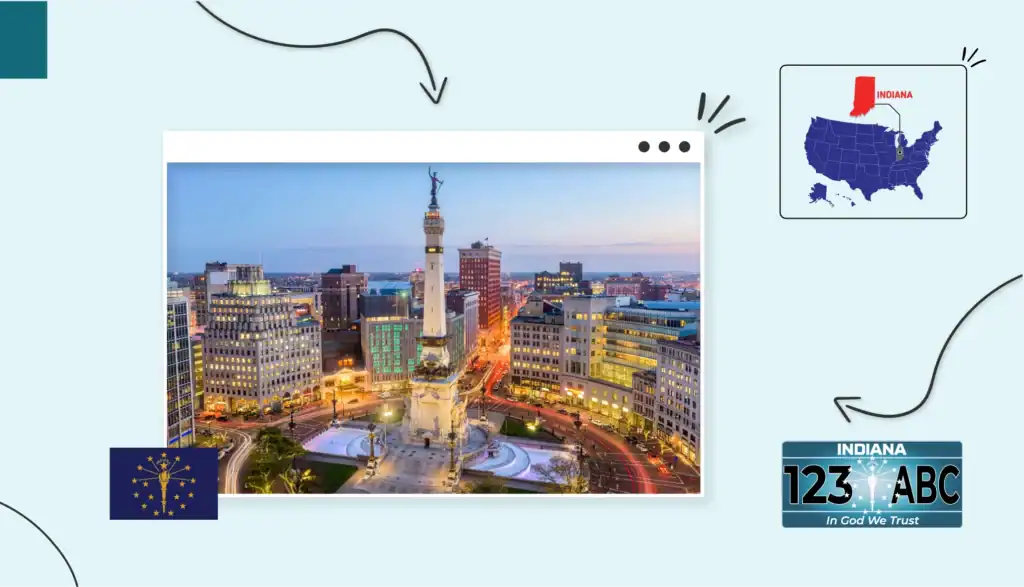
Starting a business is a big step, but it can also be one of the most exciting things you’ll ever do. And if you’re thinking about starting a business in Indiana, you’re off to a strong start. The Hoosier State is known as the “Crossroads of America;” it’s famous for friendly communities, central location, strong transportation system, and business-friendly attitude. With more than 6.8 million residents, a growing economy, low taxes, and plenty of government support for small businesses, Indiana is a place where your big ideas can grow and thrive.
In this guide, you’ll learn exactly how to start a business in Indiana, step-by-step. We’ll walk through planning your idea, choosing a business structure, handling taxes, getting insured, applying for licenses, and more.
The steps:
- Fine-tune your business idea
- Create a business plan
- Choose a business name
- Choose a business structure
- Set up Banking, Credit Cards, & Accounting
- Get Funding for your [Indiana] business
- Get Insured
- Obtain Permits & Licenses
- Find your team
- Market & Grow Your Business
- Open the doors!
1. Fine-tune your business idea

Every great business starts with a strong idea. But even a good idea needs careful thought before you jump in. Fine-tuning your idea can ensure that your business has a real chance to succeed in a competitive market.
How to find a strong business idea
First, think about your strengths. What are you good at? What do people always ask you for help with? How about your hobbies, could you turn something you enjoy doing into a full-time business?
Look for everyday problems. Good businesses help solve problems, big and small. And check what’s popular in the local area. What do Hoosiers need most? What businesses are growing, and which areas are having a tougher time lately?
Before you get too far down the business path, ask yourself these questions:
- Who will buy your product or service?
- What makes your idea different from others?
- Can you make money with this idea long-term?
- Can you start small and grow later?
Once you’ve thought through these questions, you’ll have a clearer picture of the kind of business you want to start.
Indiana-specific business ideas
Indiana’s economy and location create strong opportunities across several industries. Consider ideas that align with local demand:
- Logistics and transportation services: Warehousing, trucking, last-mile delivery (Indiana is a major logistics hub)
- Manufacturing and small-scale production: Fabrication, parts production, or specialty goods
- Agriculture and food businesses: Farming services, food processing, or local farm-to-table concepts
- Home services and construction: Remodeling, landscaping, HVAC, and maintenance services
- Tourism and event-based businesses: Especially near Indianapolis, state parks, and major attractions like the Indy 500
- College-town services: Tutoring, moving services, cleaning, or food businesses in cities like Bloomington and West Lafayette
- Local food concepts: BBQ, food trucks, or regional specialties that appeal to Hoosier tastes
Pro tip: Indiana’s central location and strong infrastructure make it ideal for logistics, distribution, and service-based businesses.
2. Create a business plan
A business plan doesn’t have to be complicated. At its core, it’s just a roadmap that helps you stay focused. You can write a short, simple plan, even one or two pages, just to clarify your steps.
There are three main elements: market research, a financial plan, and a marketing plan.
Market research
A business without customers or clients won’t stay in business for long. Market research helps you identify your potential customers and competitors so you’ll know who to target with your marketing plan.
Ask yourself: who are your customers? What do they need? Who are your competitors, and what makes your business stand out?
Financial plan
How much money do you need to start your business? What will your ongoing expenses be? How much do you expect to earn? How much will you be able to pay employees, if you have them? When will the business become profitable? Although you can’t always predict what will happen, going through your future finances before you start your business can help you avoid any major surprises or pitfalls along the way.
Creating a financial plan can also help you know when to pull the plug. While you may not want to think about your business failing before it’s even been started, knowing how long you’re willing to go without a profit (or while losing money) can make it easier to make hard decisions when the time comes. When you’re in the thick of things, it can be tough to know when to say when.
Marketing plan
Once you’ve identified your customer base, ask yourself how people will learn about your business. What platforms will you use to advertise? Will you advertise online, in your local community, or both?
Even just a one page business plan helps you stay organized, and it’s especially helpful if you want to apply for grants or loans.
Choose a location
In Indiana, your location can play a major role in how successful your business becomes. The right spot can help you get more customers, lower your costs, and grow faster.
Things to consider when choosing a location in Indiana
- Walk-in traffic: Good for restaurants, shops, and service businesses.
- Parking: Many Hoosiers travel by car, so accessible parking matters.
- Local zoning laws: Each city or town has rules about what types of businesses can operate in certain areas.
- Rent costs: Indiana generally has affordable rent, but places like Carmel, Fishers, and other “donut” communities can be pricier.
- Competition: Check how many similar businesses are nearby.
Popular business locations in Indiana include Indianapolis, Fort Wayne, Evansville, Bloomington, and South Bend. Indianapolis is great for retail, tech, logistics, and service businesses, while Bloomington and South Bend have college-driven demand. Fort Wayne boasts a large population with growing job markets, and Evansville is a well-kept secret of steady economic growth and a bustling riverfront.
Decide if you’re an online-only business
You can run your business in three main ways: online only, brick-and-mortar, or a mix of both.
If you choose an online business, you need: a website; social media accounts; a supply and shipping plan; a way to accept payments online; and a plan for customer support.
Indiana regulations for online businesses
Indiana has relatively simple rules for online businesses. However, with some exceptions outlined below, you must collect Indiana sales tax for online sales within the state. You also need to register your business with the Indiana Secretary of State if you operate as anything other than a sole proprietorship. And some digital businesses may require special permits depending on their services.
As of January 1, 2024, Indiana eliminated its 200-transaction threshold. This threshold meant you only needed to collect and remit Indiana sales tax if you made 200 or more transactions in the state. Now, there’s a flat $100,000 threshold for gross sales. If you sell less than this amount to Indiana residents, you don’t need to get a registered retail merchant certificate with the Secretary of State.
Indiana also has a data protection law: the Indiana Consumer Data Protection Act (INCDPA). This law applies if you control or process the personal data of at least 100,000 Indiana residents (or at least 25,000 residents if more than half of your revenue comes from selling personal data). Under INCDPA, you need to provide notice to consumers, allow them to opt out of certain tracking activity, and implement security protections to keep their personal data safe.
3. Choose a business name
Your business name is your brand. It should be easy to remember, easy to spell, and easy to share.
Some tips for choosing a great name include:
- Keep it simple
- Be sure it matches your brand
- Choose something that looks good on a website and social media
- Check that the domain name is available
It’s also a good idea to ask your friends or family for honest opinions about the names you’re considering. They may be able to spot issues or concerns you don’t see.
Indiana naming rules
When naming a business in Indiana, your name must be unique in the state. You can search available names by conducting an Indiana business entity search.
If you’re forming an LLC, the business name must include either “LLC” or “Limited Liability Company.” And if you want to use a name that’s different from your legal business name, you’ll need to file a DBA (“doing business as”) form, which Indiana calls an assumed business name.
4. Choose a business structure
Your business structure affects how you pay taxes, your legal protection, and how you operate your business.
Common types of business structures in Indiana include sole proprietorships, partnerships, LLCs, and corporations. Each of these structures has its own advantages and disadvantages, briefly highlighted below:
Sole Proprietorship
- Easiest to start
- No legal separation between you and the business
- You pay personal taxes on all profits with a simple personal tax return
LLC (Limited Liability Company)
- An Indiana LLC is very popular in the state
- Protects your personal assets
- Easy to manage
- Flexible for taxes—you can choose whether you’re taxed as a sole proprietorship, partnership, or S-Corp
Corporation
- Good for larger businesses
- More rules to follow
- Special tax and ownership requirements, keeping business and personal taxes separate
Indiana is known for low business taxes, which makes it attractive for new business owners. With one of the lowest corporate income tax rates in the country, businesses keep more of their profits. This can assist in hiring new employees, expanding operations, and investing in new equipment. And while Indiana does have a statewide sales tax of 7 percent (with additional local sales taxes in some cities like Indianapolis), many types of equipment, raw materials, and manufacturing supplies can be exempt.
Indiana also has a flat personal income tax rate, which benefits sole proprietorships, LLCs, and partnerships. These business structures have income “pass through” to the owner’s personal tax return. And with no gross receipts tax, businesses can keep more of their money during slow periods or the early startup phases.
5. Set up banking, credit cards, & accounting

Once your business is officially established, you should keep your money separate from your personal funds. Not only does this make recordkeeping and taxes easier, but it also helps protect your personal assets if your business is sued or audited.
To get started, you’ll need a business checking account, a business credit card, and some accounting software.
Indiana-specific requirements
Indiana requires businesses to get an employer identification number (EIN) to open a bank account, unless you’re a sole proprietor. You’ll also need to register with the Indiana Department of Revenue if you plan to collect sales tax or have any employees.
There are a number of business-friendly banks in Indiana, including some local and regional banks. A few of these include Fifth Third Bank, Old National Bank, Horizon Bank, Chase, and PNC. Credit unions like Teachers Credit Union and Centra Credit Union may also be good banking options.
Federal & state tax requirements
All businesses must file a federal income tax return with the IRS and pay Indiana state income tax. If you make any retail sales, you must collect the 7% sales tax on all sales (plus any additional local taxes).
6. Get funding for your Indiana business
You don’t have to fund everything yourself. Indiana offers grants, loans, and local programs to help you get started. Some common types of funding include bank loans, Small Business Association (SBA) loans, credit unions, grants, private investors, and even crowdfunding.
Indiana-specific grants and programs include:
- IEDC (Indiana Economic Development Corporation), which offers incentives and grants for growing businesses.
- Indiana Small Business Development Center (ISBDC) helps with training and funding guidance.
Many counties and cities offer local small business grants Indiana, especially for businesses that are focused on revitalization or downtown business growth. And SBA 7(a) and 504 loans are popular in Indiana for new business owners. These loans are flexible loans for small businesses that are partially guaranteed by the SBA; this guarantee makes it easier for lenders to provide financing. SBA 7(a) loans can cover working capital, equipment purchases, real estate, or refinancing current debt. Maximum loan amounts can reach $5 million.
7. Get insured
Running a business without insurance is like driving a car without insurance. Having a solid business insurance policy protects you from risks and unexpected problems.
Common policies you may need
- General liability insurance, which covers everything from slip-and-fall claims to copyright infringement.
- Property insurance, which covers any damage to your property and can provide business-interruption coverage if you need to shut down for repairs.
- Commercial auto insurance, which covers any fleet vehicles that may not be covered under your personal auto insurance policy.
- Professional liability insurance, like malpractice insurance or errors and omissions coverage. This insurance helps protect you from any financial liability caused by mistakes you or your staff make.
- Cybersecurity insurance, which can protect you from phishing scams or identity theft
Indiana requirements
If you have employees, Indiana requires both workers’ compensation insurance and unemployment insurance. Unemployment insurance is paid through the state, while workers’ compensation insurance can be purchased from a private insurer.
Insurance protects your business and helps build trust with customers, so it’s one of the key cornerstones of your business.
8. Obtain permits & licenses
There is no general Indiana business license, but most businesses need state, local, or industry-specific approvals:
State-level requirements:
- Retail Merchant Certificate: Required to collect sales tax (Indiana Department of Revenue)
- Professional licenses: Required for industries like cosmetology, real estate, healthcare, and skilled trades
- Environmental permits: Needed for businesses handling waste, emissions, or regulated materials
Local (city/county) requirements:
- Zoning and occupancy permits: Required for physical locations
- Building and fire inspections: Especially for storefronts or renovations
- Local business permits: Vary by city (e.g., Indianapolis vs. smaller towns)
Industry-specific examples:
- Food businesses: Health department permits + food safety inspections
- Contractors: May require licensing depending on city or trade
- Alcohol sales: Permit from the Indiana Alcohol & Tobacco Commission
- Home-based businesses: May require zoning approval or local registration
Important:
- Requirements vary widely by city and industry, so always check with your local municipality first
- Even online businesses may need a Retail Merchant Certificate if selling taxable goods
9. Find your team
People are the heart of your business. Even if you’re working solo, you’ll likely need help.
The right people bring ideas, help with customers, build trust, and support you as you grow. Surround yourself with mentors, advisors, and people who believe in your vision.
Comply with Indiana payroll regulations
If you hire employees, you must register with the Indiana Department of Workforce Development (DWD). Follow state minimum wage laws by paying at least $7.25 per hour (or $2.13 per hour for tipped employees). Indiana also offers a “training wage” for employees who are under 20 years old; these employees can be paid as little as $4.25 per hour for their first 90 days of employment.
Keep in mind, many businesses pay well over this minimum wage, so you may need to raise your pay rates in order to attract the best employees. Using payroll software can help you stay compliant with all state and federal regulations.
Hire contractors
Many small businesses hire contractors instead of full-time employees, especially when you’re just starting out. Contractors can provide more flexibility, since you can pay them by the hour for hours worked instead of offering full- or part-time employment.
Common Indiana contractors include accountants, web designers, marketing professionals, bookkeepers, and delivery drivers.
Make sure to follow Indiana’s rules on contractor classification to avoid legal issues. This means treating your contractors like contractors, not full-time employees; for example, you can’t require contractors to show up at 8:00 a.m. every day or mandate an in-office presence. Contractors need to be free to set their own hours and, as long as they’re performing the work you’ve outlined by any deadlines you’ve set, direct the flow of their work.
10. Market & grow your business
Once you’re ready to attract customers, it’s time to spread the word.
- Build a mailing list. Invite customers to join your email list so you can share news, deals, and updates.
- Offer special deals. Discounts or “grand opening” specials can help you attract your first customers and set up a pattern of repeat business.
- Partner with other local businesses. Indiana has a strong sense of community, so partnering with beloved nearby companies can help you grow faster.
- Encourage word of mouth by offering referral bonuses or coupon codes. Happy customers will tell others, and in tight-knit Indiana communities, this is powerful. By offering a discount or referral bonus for each new customer who hears about you from another customer, you can quickly spread the word about your services.
- Ask for reviews. Online reviews help build trust and bring new business.
- Create helpful and engaging online content. People spend more time on their mobile devices than ever before, so sharing tips, videos, or guides can show your expertise and get your name out.
11. Open the doors!
This is the moment you’ve been working toward—the day your business officially comes to life. No matter how your business is structured or where it’s located, this step is all about letting people know you’re ready to serve them.
Plan a launch event
Think about hosting a small celebration to build excitement. A ribbon-cutting, grand-opening sale, or open house can help you meet your first customers and introduce yourself to the community. If you’re an online business, you can do a digital version like a social media countdown, a giveaway, or a livestream showing what you offer. Even a small launch event can create buzz and give people a reason to check you out.
Make your first sale
Once that first sale comes in, you’re officially in business. It might be a customer walking through your door, someone checking out on your website, or a neighbor who’s been cheering you on. That first transaction is a huge moment, and it sets the stage for many more to come.
Celebrate the win!
Starting a business takes courage, planning, and a lot of hard work. So take a moment to celebrate—you’ve earned it. And now, the fun part begins: growing your brand, meeting customers, and watching your business take off.
Conclusion
Starting a business in Indiana is exciting—and with the state’s low taxes, strong communities, and friendly business environment, it’s a great place to grow your dream. By following these steps, planning well, and using local resources, you can build a business that thrives in the Hoosier State.
FAQ
Indiana doesn’t have a universal statewide license. But many businesses (like those that serve food or alcohol or provide a specialty service) need local permits or industry-specific licenses, so always check with your county or city to see if your unique business requires licensing.
Your Indiana LLC filing fee is around $100 online though the Secretary of State’s website. You’ll also need to file a regular business report every two years. If you don’t file these reports on time, your business may eventually be involuntarily dissolved, which means you’ll need to start from scratch to become an LLC again.
Yes! Through the Indiana Economic Development Corporation, local chambers of commerce, and city development offices, Indiana offers multiple grants. Many grants are available for small, minority-owned, rural, and startup businesses, so do some research to make sure you’re aware of everything that’s out there.