

An LLC lookup is a search through Georgia’s official database for a specific LLC entity. The Secretary of State keeps details of all registered businesses, whether active or not, so that you can do your due diligence before you start a business or partner with a business. We’ll take you through the steps so you know how to perform a lookup and why it’s a smart step to take.
Why you might need an LLC lookup in Georgia
LLC lookups essentially come down to verification:
- See if a business is both active and in good standing.
- Confirm the name and address of either the owner or the Georgia registered agent.
- Ensure that your business name is unique.
LLC lookups can’t answer every question. In fact, Georgia may only list a few bare facts. However, you can use the state’s resources as foundational research, especially if you only need the basics.
What an LLC lookup is
An LLC lookup cross-references all individual records on businesses in the state. This method is a reliable public source, but it is not 100% accurate. There may still be either inconsistencies or false information listed in the database.
What an LLC lookup helps you confirm
Standing
Georgia’s state lookups can show you if an LLC in Georgia is in:
- Good-standing: Businesses that are authorized to do business and are current on all legal obligations.
- Non-compliance: Businesses that have missed a requirement, such as paying a state fee. They may still technically be active and allowed to conduct business, but they may lose legal protection if they’re non-compliant.
- Dissolved: Companies may dissolve voluntarily or administratively. Usually, if they’re forced to dissolve, it’s because they missed filing an annual registration.
- Revoked/withdrawn: This usually indicates that an LLC is no longer operating in Georgia (either voluntarily or mandated), though the LLC may still be in operation elsewhere.
- Merged: Indicates that the company has merged with another company.
Date and location of filing
LLC lookups reveal the date and location of the company’s formation, even if the company didn’t originally form in Georgia. As long as the business operates in the Peach State, you can see their filing information.
Name and address of registered agent
Registered agents refer to either a person or outside entity that can accept and handle official paperwork on behalf of an organization. In some cases, the registered agent is the owner of the company. In others, it’s a law firm or attorney. Registered agents must list either an individual or business name and current, valid address (not a PO Box).
What an LLC lookup won’t show you
LLC lookups do not necessarily reveal the owners of the company. This may seem like basic information to exclude if you’re new to lookups, but Georgia grants owners the right to remain anonymous if they choose. This may make it difficult to confirm who is at fault if you’re pursuing legal action, but you can always work through the registered agent if need be.
Common reasons people run an LLC lookup in Georgia
People run lookups to:
- Confirm that a business is in good standing before making any transactions.
- Confirm that a new business’s name is distinguishable from other LLCs in the state.
- Verifying who to send official paperwork to, such as a contract or lawsuit.
- Confirm that their business’s name is up-to-date on all filings and fees.
What you can find in a Georgia LLC lookup
Georgia lookups typically show the:
- Legal business name
- Entity number
- Status
- Formation date
- Filing history/linked paperwork
- Jurisdiction
- Registered agent and address
Please note that Georgia does not require LLCs to list the owner, managers, or members. This does not necessarily mean that a business is not trustworthy, though you should use your best judgment if an LLC either doesn’t answer basic questions or provides information that directly contradicts your LLC lookup.
Conducting an LLC search in Georgia: step-by-step guide with tips
LLC lookups are easy and fast. Follow our simple tips.
1. Go to the official Georgia LLC search portal
Visit the Georgia Secretary of State’s website. You can search by business name, registered agent, control number, or officer name, though most people will just start with the entity name. Georgia also provides search mechanisms for lawsuits and trademarks, so you can find additional information beyond the business’ name and filing date.
Please note that Georgia’s own SoS website draws attention to the database’s limitations. For example, the database does not contain pending applications or federal trademark information. This search is a foundation for understanding an LLC, not a comprehensive list of facts.
2. Choose the best search method
There are several ways to search Georgia’s SoS site. Main radio buttons include:
- Starts with/contains: If you’re not sure of the business’s exact name, you can use either search mechanism to narrow it down.
- Exact name: If you know the exact name of the business, it may help you avoid scrolling through endless irrelevant LLCs.
If you don’t know the name or you’re overwhelmed by the partial search results, you can switch to searching by registered agent, control number, or officer name.
3. Use quick search tips to get accurate results
The Georgia database has a few interesting limitations. For example, if you search Johnson and Johnson under the exact name match, nothing comes up. However, if you switch to Johnson & Johnson, you’ll get more than 100 records. Here are a few tips to avoid wasted efforts:
- Avoid punctuation or special characters
- Search LLC rather than L.L.C.
- Include the business’ core keyword(s) (e.g., pool supplies, etc.)
- Use the entity number, if available
The entity number can help you avoid scrolling through the names of businesses that were only open for a couple of months and dissolved years ago.
4. Open a result and read the key fields
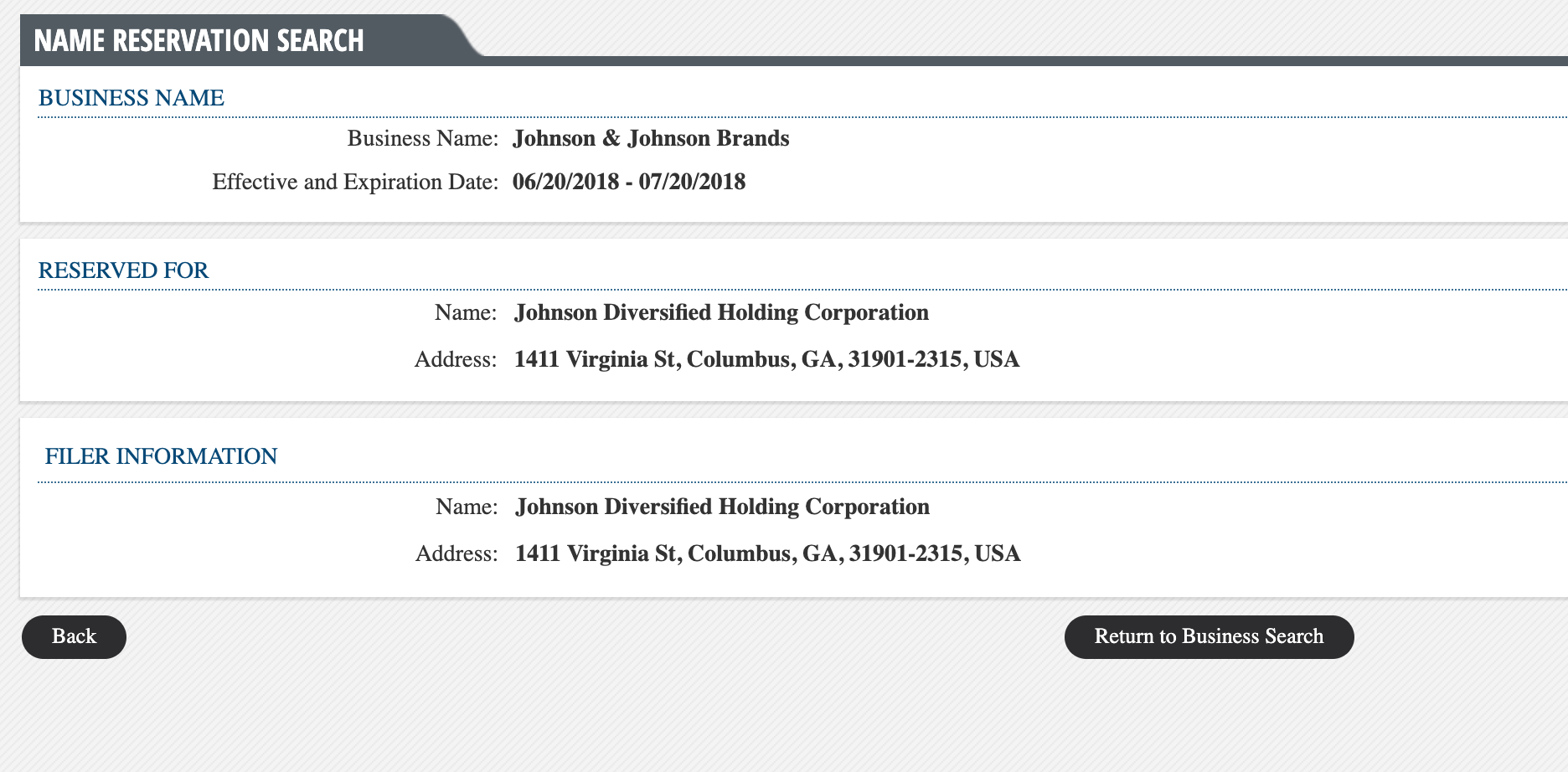
Once you’ve found the business, you simply click on it to see the details. Please note that the records will be different based on the available information and the purpose of the filing. For example, the SoS website lists name reservations in its LLC lookups, which can be helpful if you’re researching whether your name contradicts another business’s name. .
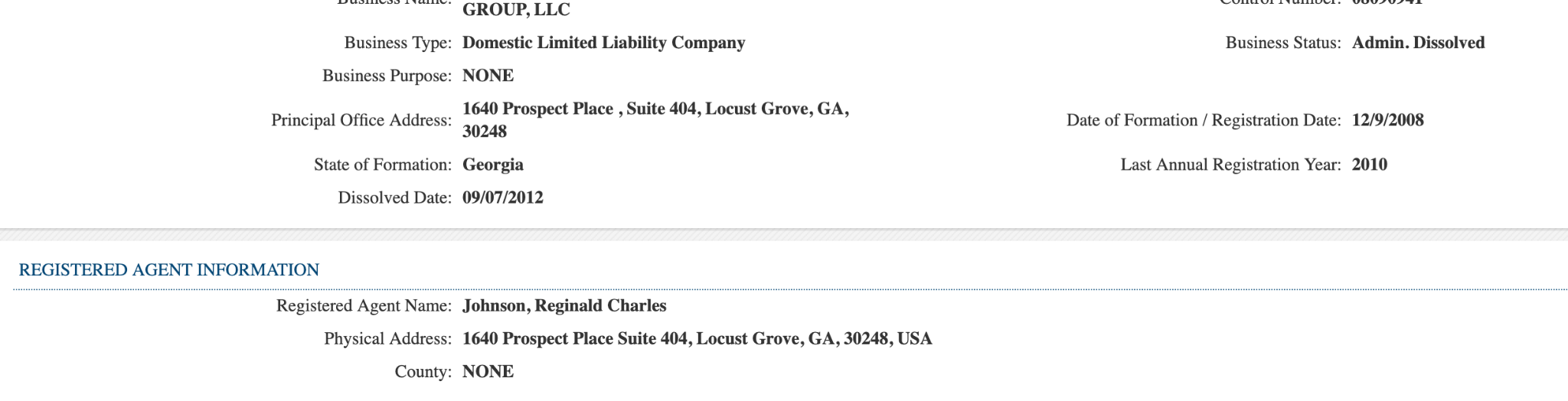
A more traditional filing will show you additional business details, such as the type of business, purpose, registration data, and registered agent information.
5. Check filings / PDFs for deeper details
You can click on Filing Information or Name History to dive deeper into the business. In either section, you might find the following documents and official paperwork:
- Business formation
- Annual registration
- Intent to dissolve
- Voluntary dissolution
- Name change history
- Administrative Dissolution
- Revocation
This paperwork often reveals information that you can’t find on the main page, like officer names and locations. While owners are still not required to disclose this information, it can be a good way to get a better sense of the company.
How to verify an LLC is legit in Georgia
It’s not always easy to determine if a Georgia company is legit. Major companies are not immune to fraud and tiny companies with no history may be staffed by extremely trustworthy people.
Here are a few things to keep in mind though if you don’t have time to consider every possible angle:
- Confirmation: Georgia lists all operating businesses in the state, even if those businesses were formed halfway around the world. If you can’t find the company, that’s a major red flag.
- Status: Missed paperwork, revoked licenses, and late fees may indicate that the staff is either disreputable or that they miss important details.
- Registered agent data: Match the registered agent’s name to the company’s official paperwork. If it doesn’t match, make sure that there’s official paperwork showing a change in registered agent.
- Paperwork: Legit companies have nothing to hide. If you can’t find any paperwork or they refuse to supply you with paperwork upon request, this is a major red flag.
What to do after your Georgia LLC lookup
This ultimately depends on what information you need from the lookup.
If you’re researching a business in Georgia
Additional action items include:
- Ordering a Certificate of Good Standing (especially if you need it for a financial or legal transaction).
- Save official paperwork for further research.
- Search Georgia’s public license records to confirm licensing.
- Search the Uniform Commercial Code database for additional legal or financial dispute information.
If you’re starting an LLC in Georgia
Once you’ve verified that your name complies with the state’s naming rules, you just need to choose a registered agent, file for official status, and set reminders to avoid missing deadlines!
Conclusion
Georgia’s Secretary of State’s website is a treasure trove of information, whether you’re starting a business in Georgia or deciding whether to acquire a new one. Use a lookup as a starting point to find businesses that fit. Once you’ve narrowed it down, you can start digging into more state databases if need be.
FAQ
No. Georgia businesses need only provide a registered agent, which is an official party who can handle the business’s formal paperwork, like contracts.
Not necessarily. The UCC is a more detailed way to verify financial violations.
Yes, being in non-compliance may only mean that a company accidentally forgot to file a form. However, non-compliance may also indicate more systemic issues and it can lose a company legal protections in Georgia, which may threaten your business if anything goes wrong.