
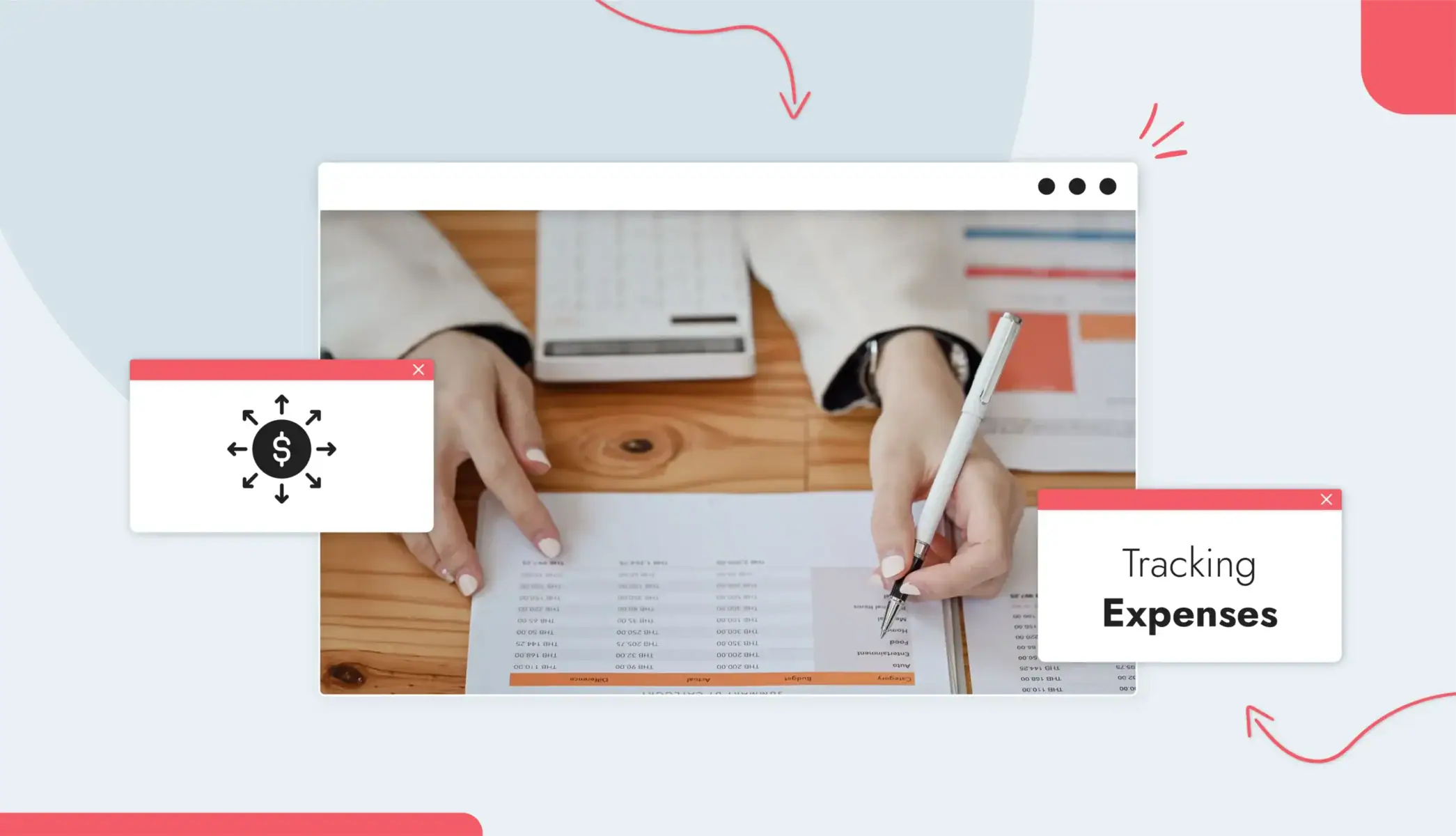
Tracking business expenses is one of the more neglected parts of a business, and it’s not because business owners don’t care about how much they’re spending. Tracking business expenses is not only time-consuming, it’s also confusing and easy to make a critical error. Even one wrong number can send your finances into an unintelligible mess.
Attempting to categorize every expense (and determining whether it ended in a loss or gain) is tough enough when you have a full accounting team. However, as a small business, you’re much more likely to be working with a CFO who’s also doubling as a manager and a standard employee. Here, we’ll look at how to create better habits from the beginning, so you don’t have to untangle the financial threads later on.
What is business expense tracking?
Business expense tracking is a record of business-related expenses. It organizes all purchases, including daily costs, monthly subscriptions, and one-time expenses. This is a seemingly more complex task than it sounds.
When many business owners leave expense tracking until the end of the month, or worse, tax time, it’s no wonder that small business owners often have either incomplete or downright illogical books. Failing to create a good system today, is a good way to set yourself up for failure tomorrow.
The good news is that systems don’t have to be complicated or expensive to implement. In fact, they don’t even need to be airtight at first. Instead, your first goal is to focus on building consistent habits. The routines that you build now, whether it’s a simple spreadsheet or the advanced version of QuickBooks, are the key to establishing an efficient process that works over time.
Why tracking business expenses is important
Expense tracking improves your business’ visibility. Without it, you won’t know how profitable your business is (which can make it difficult to interest lenders or investors). You can see not just where your money is going, but how much you’ll have left over. You can make better estimations of how much you’ll pay in taxes, and whether you can afford that fancy new equipment you’ve had your eye on.
If you’re wondering how to keep track of business expenses, it’s likely because you’ve become lost in a sea of numbers. Better expense tracking provides clarity and can help you eliminate unnecessary costs. In fact, companies lose up to 5% of revenue annually due to expense fraud and policy violations, making accurate tracking even more critical for long-term profitability.
What expenses should you track?
There is no business-related expense that you shouldn’t track. This sounds simple, but this stipulation is more complex than it first appears. For instance, if you use a home office, what portion of the rent/mortgage should you deduct as a business expense?
This is just one reason working out a system early on can be so beneficial. It helps you separate personal expenses from business expenses and categorize your expenses into the correct buckets. Start by listing all recurring expenses as your budget’s baseline.
The bright side is that there’s no need to overthink all of your expenses! For instance, if you work 8 hours of a 16-hour day and use your mobile phone for business calls, you can just divide your phone bill by half as a business expense.
How to keep track of business expenses
Tracking your business expenses doesn’t have to be intimidating. The key is consistency, which means streamlining your system and putting in a few fail safes so you can jump back in if you fall off the wagon.
Clear categories
Categories are arguably one of the more challenging thought exercises when it comes to financial planning. Too many, and it will be confusing. Too few, and you’ll struggle to classify weird or otherwise one-time expenditures.
As a general rule, it’s more important to work through how you’ll classify things for yourself as opposed to what you think the IRS wants to see. If you are audited for any reason, it will be easier to organize your documents and clarify your reasoning behind it.
Recording expenses regularly
Every expense, whether it’s a tip to a delivery driver or the 30 computers you ordered for your staff, should be recorded either on a daily or weekly basis. If you’re spending a lot, especially if you’re still in the early stages starting a business, even waiting until the end of the week can be a recipe for disaster.
Consider that your bank statements will certainly reveal some data if you wait but can lead to a lot of questions about exactly what you bought and why. Instead, try to record it all as quickly as possible, both so you remember and so you build good habits.
Keep all receipts and documentation
Keeping your receipts and documentation is obviously a good way to organize your finances. But it’s also a good way to use up all of your physical/digital storage space really quickly.
Now would be a good time to consider where you want to store your expense documentation, and whether it makes sense to invest in a cloud account or secured storage facility. This way, you don’t have to worry about your receipts using up too much of your personal storage or losing your valuable data to thieves of any kind.
Reconciling bank statements
Errors lead to money loss, and if you’re not paying attention, you can end up running into more discrepancies than you think. If your receipts and expenses don’t reflect the numbers in your accounts, you may need to start parsing through the charges to find the problem.
Many statement issues can be worked out by double-checking your work, but it may mean calling a merchant about a billing error or the bank about a mismatch on their end.
Review spending
Your spending needs will regularly change, sometimes on a daily basis. Products and services that you can’t live without today may become obsolete very quickly.
Reviewing your spending doesn’t just show you where to cut back on luxuries, whether it’s one too many business lunches or a new iPad, it can save you from paying monthly fees that ultimately provide little to no value.
What’s the best way to track expenses for a small business?
The best way to keep track depends on your business workflows:
- Spreadsheets: These are undoubtedly the most cost-effective way to line item your expenses. These free tools give you boxes and formulas to write it all down. Just keep in mind that spreadsheets are also easy to either confuse (e.g., input the wrong numbers in the wrong columns) or forget about entirely.
- Tracking apps: There are endless tracking apps available for businesses to help them stay on top of their budget. Some are free, some are paid, depending on the functionality. Some are easy to use, others seem built to confuse you. Looking into the reviews can help you get a sense of what it’s really like to use on a daily basis.
- Full accounting software: By far the most expensive option, full accounting software can still be a smart choice because it automates much of your expense tracking and alerts you if there’s anything missing.
Most companies start small and then move to more comprehensive solutions over time. Smaller businesses will have no use for endless tools and options at first, but as they scale, that might become the only way to keep track of it all.
What to look for in a business expense tracker
The best business tracker for you is always the one that you’ll use. If you don’t want to spend time inputting endless numbers or organizing documents, look for software with built-in tools, like reporting or receipt storage. Prioritize tech that can integrate with your other tools to help avoid gaps in your accounting. For example, you might choose an accounting tool that can access your bank statements or petty cash records.
Also, if you have a lot of recurring expenses, automation tools can populate these fees so you don’t have to keep inputting them every week (or every month). Rule of thumb: if you find yourself puzzling for several minutes over when a tracker actually does, it’s probably not the right tool for you.
Common mistakes when tracking expenses
Common mistakes include:
- Inconsistencies: Maybe you always record your monthly expenses, but you fall behind when you order food for the team on late nights or have to replace a one-off damaged iPad.
- Losing receipts: When you can pay using anything from cash to a credit card to Venmo, your receipts matter. Losing or forgetting them can leave you scrambling to log into every account you’ve ever had. Losing them if you paid with cash can leave you with no transaction record at all.
- Mixing personal and business: This is a common one for business owners, especially if you can’t always predict when and where you’ll need to buy business expenses. For instance, maybe you’re at Costco and you pick up a few things for work while paying with your personal credit card.
Most of these issues tend to start small: a missed receipt here, a miscategorized expense there, and then build over time. If you’re going to wait and try to run through all of it on April 14, you could find yourself in for a rude awakening.
Preparing your business for expense tracking
Preparation depends on the type of business you run. For example, sole proprietors often file their personal and business taxes together, without having separate bank accounts.
As mentioned, the better approach is to pick a system that works for you. If you’re struggling with how to structure your finances, whether you’re an S Corp, LLC, or corporation, platforms like Tailor Brands help business owners learn their (legal) options and anticipate the pros and cons of each potential choice.
With Tailor Brands, you can feel more confident not just when you first form the business, but as you cement your best practices. From document management to categorization, you can start making sense of each cent.
Conclusion
Expense tracking is more than just holding onto your receipts. You have to know how you’re spending money if you want to manage it. Expense tracking is a core part of your business, one that promotes visibility into your market position.
Keeping systems simple, especially at the beginning, can be the key to consistency. Strong habits, even if they’re basic, can be much more valuable than a software that claims to ‘do it all for you’.
Staying organized doesn’t just reduce problems later, it also gives you a sense of control over sometimes unwieldy numbers. You end up making smarter financial planning decisions, reducing impulse buys, and ultimately feeling calm if the IRS ever wants to have a chat with you.
FAQ
It’s the practice of recording and organizing all business-related purchases, from daily costs to monthly subscriptions and one-time expenses.
It provides visibility into profitability, helps estimate taxes accurately, and can reduce revenue loss from fraud or unnoticed spending errors.
Options include spreadsheets, tracking apps, and full accounting software, with businesses often starting simple and scaling up as they grow.
Common mistakes include inconsistent recording, losing receipts, and mixing personal and business purchases.
Expenses should ideally be recorded daily or weekly rather than waiting until month-end or tax time, which increases the risk of errors.