
Starting an online business has never been more accessible. Between low startup costs, the ability to work from anywhere, and a global customer base, there are a lot of things that make online businesses attractive to first-time founders and experienced entrepreneurs alike. Whether you’re looking to launch something with long-term growth potential or just build a nice side hustle, there are more paths available than ever before. All you need is determination and the right idea.
The best online business idea depends on your specific situation. Factors like your skills, budget, available time, and goals all determine which opportunity makes the most sense. This guide walks through the most promising categories of online businesses, from service-based work to ecommerce to knowledge products, so you can find an idea that fits your needs.
What makes a good online business idea?
There is a wide range of successful online businesses, but they tend to share a few common traits. Here are some of the traits that make for a good online business idea:
- Low startup costs: Most online businesses can be launched without significant capital. Many only require a laptop, a reliable internet connection, and a few software subscriptions.
- Remote-friendly operations: A good online business can be managed from wherever you work best. This flexibility is one of the biggest draws for people exploring online business ideas from home.
- Scalability: The best online businesses have room to grow. Whether that means taking on more clients, automating parts of the operation, or expanding product offerings, there should be a realistic path to increasing revenue over time.
- Real market demand: A business idea only works if people are willing to pay for it. Focus on solving a specific problem or serving a specific audience rather than chasing trends.
- Alignment with your skills and interests: Businesses built around what you already know tend to start faster and encounter fewer early roadblocks.
Service-based online business ideas
Service-based businesses are among the most accessible online business ideas since they entail monetizing skills you already have and tend to require minimal upfront investment. Here are the most common types of service-based online businesses:
Virtual assistant business
Virtual assistants (VAs) work remotely to provide administrative and operational support to business owners and executives. Managing email inboxes, scheduling appointments, handling customer inquiries, researching topics, and organizing files or data are a few of the services VAs commonly perform.
Starting a VA business requires little more than strong organizational skills, clear communication, and familiarity with productivity tools like Google Workspace or project management platforms. It’s a business model that is well-suited for people who are detail-oriented and enjoy variety in their daily tasks. Many VAs start with one or two clients and grow through referrals.
Social media management
Businesses of all sizes need help creating and maintaining a strong social media presence. However, many don’t have the time or expertise to manage it themselves and instead choose to hire a social media manager. Social media managers handle tasks like content creation, scheduling, community engagement, and sometimes paid advertising, all with the goal of growing a business’s social media following so that it can reach more customers.
Demand for social media management continues to grow as more businesses recognize the crucial role that online presence plays in customer acquisition. When you are first starting out as a social media manager, specializing in a particular platform or industry can help you stand out.
Online bookkeeping services
Small business owners frequently need bookkeeping support but can’t justify hiring a full-time accountant. Starting a bookkeeping business and running it online fills this gap, handling tasks for small business owners like tracking income and expenses, reconciling accounts, and preparing records for tax season.
Acquiring certifications, such as those offered through QuickBooks or the American Institute of Professional Bookkeepers, can strengthen your credibility. Prior experience in accounting or finance helps, but it’s also a field where dedicated self-study and certification can open doors.
Freelance writing, design, and marketing services
Starting a freelance business is a broad and flexible category. Writers, graphic designers, web designers, SEO specialists, and email marketers all operate successfully as independent contractors. The common thread is that clients need skilled help and prefer to hire freelancers over full-time employees.
The opportunity to specialize is significant here. A freelance writer who focuses exclusively on SaaS companies, or a designer who works only with fitness brands, can typically charge more and attract better-fit clients than a generalist. Building a portfolio and gathering testimonials early on also makes a meaningful difference.
Ecommerce and product-based online business ideas
If you prefer selling products over providing services, there are several ecommerce models that offer a realistic path to building an online business.
Niche ecommerce store
A niche ecommerce store sells products to a specific audience rather than competing in broad, high-volume categories. For example, outdoor gear for ultralight backpackers targets a much more defined customer than selling “outdoor gear” in general and makes it easier to distinguish your business from the major players in broader spaces.
Choosing the right niche when starting a ecommerce business is by far the biggest key to success. You want enough demand to sustain a business but enough focus to build a loyal customer base.
Inventory management and fulfillment are often the main operational challenges with this business model. Some store owners handle their own inventory, while others use third-party fulfillment services or dropshipping arrangements.
Print-on-demand business
Print-on-demand (POD) businesses create custom-designed products that are manufactured and shipped by a third party only when an order is placed. This eliminates the need to purchase inventory upfront.
Common POD products include t-shirts, hoodies, mugs, tote bags, phone cases, and home decor. Platforms like Printful and Printify integrate with popular ecommerce platforms, making it relatively easy to set up a POD business. However, success in print-on-demand heavily depends on the quality and originality of your designs as well as your ability to reach the right audience.
Digital products
Selling digital products is one of the most scalable online business models because the product can be delivered automatically with no inventory or shipping involved. Popular digital product categories include:
- Templates for resumes, presentations, social media graphics, or spreadsheets
- Planners and workbooks in printable or fillable PDF formats
- Business resources like swipe files, checklists, and standard operating procedure documents
- Downloadable assets such as stock photos, fonts, and icons
Creating the product requires an upfront time investment, but once it’s built, it can be sold repeatedly. Selling through platforms like Gumroad, Etsy, or your own website are all common approaches.
Skills-based online business ideas
If you have specialized expertise, turning that knowledge into a product or service is one of the most direct paths to building an online business. Here are a few common examples of skill-based online businesses:
Online courses and education
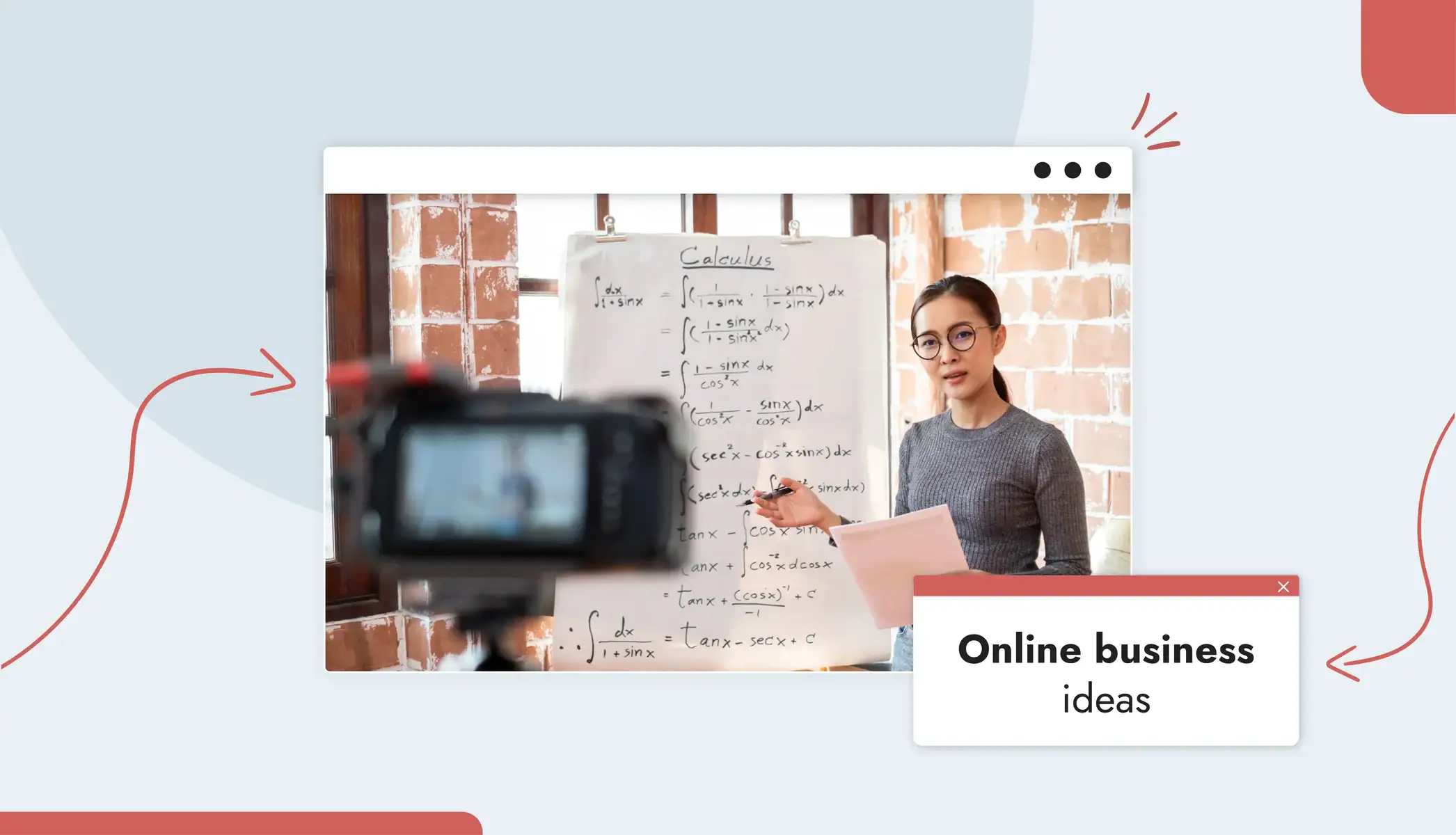
Subject matter experts across nearly every field have turned their knowledge into online courses designed to help others learn the same skills. Topics range from professional skills like project management and copywriting to personal interests like photography, cooking, and language learning.
There are a variety of formats that these online courses can take, including pre-recorded video lessons, live cohort programs, written modules with worksheets, and community-based learning experiences. Platforms like Teachable, Thinkific, and Kajabi make it possible to host and sell courses without building a custom website from scratch.
Consulting business
Consultants help businesses (or sometimes individuals) solve specific problems, improve processes, or develop strategies. Nearly any professional background can support a consulting practice, including marketing, finance, operations, HR, and technology.
The benefits of consulting include high hourly rates relative to other online service models and flexibility over your schedule and client mix. The main challenge is lead generation, particularly early on. Building an audience through content marketing, LinkedIn, or a professional network tends to be the most reliable approach for new consultants. If you’re looking at how to start a consulting business, now is the best time to do it!
AI consulting and implementation services
One of the newer online business ideas gaining real traction in 2026 is helping businesses understand and implement AI tools. Many small and mid-sized businesses know they should be using AI to improve efficiency, but they don’t know where to start.
AI consultants help clients identify the right tools for their needs, set up automation systems, train teams on new platforms, and develop AI usage policies. This category is growing because the gap between AI capabilities and most businesses’ ability to use them effectively continues to widen. A background in operations, marketing, or software can all serve as a foundation for this kind of work.
Online business ideas from home
Most of the business models covered above can be operated entirely from home. That flexibility is a major reason so many people explore new online business ideas in the first place.
Running a home-based business does come with a few practical considerations worth addressing early. A dedicated workspace, even a small one, helps create separation between work and personal time and tends to help you focus on work and stay productive. If you work with clients or customers who expect professional communication, a quiet space for calls and meetings matters.
Some local jurisdictions also require home-based businesses to obtain a home occupation permit, particularly if you plan to see clients in person or employ others at your residence. Requirements vary widely by location, so it’s worth checking your local regulations before you launch.
Finally, keeping your business finances separate from personal finances is important regardless of your business structure. A dedicated business checking account and a clear system for tracking income and expenses will save you significant time when tax season comes around.
How to choose the right online business idea
There is no shortage of business ideas to choose from, which can often make the choice feel overwhelming. Here are the most important considerations to keep in mind as you go about narrowing your options down:
- Skills and experience: What do you already know how to do well? Starting with your existing strengths reduces the learning curve and gets you to paying customers faster.
- Startup budget: Some online businesses, like freelancing or consulting, can start with almost no money. Others, like ecommerce, may require more of an investment to get started. Know what you’re comfortable spending before you choose.
- Time commitment: Some business models require more active time than others. A client-service business requires consistent availability, while a digital products store can eventually operate with less daily involvement.
- Market demand: Spend time researching whether people are actively looking for what you plan to offer. Online search volume, competitor presence, and community discussions in forums or social media groups all provide useful data about market demand.
- Long-term growth potential: Think about where you want the business to be in three to five years. Some ideas are better suited to solo freelancers who prefer to stay small, while others have natural paths for scaling.
Turning an online business idea into a business
Once you’ve settled on an idea, there are a few key steps that move you from an idea to an operating business:
- Choose a business structure: Many online business owners form a limited liability company (LLC) because it provides liability protection while remaining relatively simple to manage. Sole proprietorships are easier to start but offer no personal asset protection.
- Obtain an EIN: An Employer Identification Number, issued by the IRS, is used for tax purposes and is required to open a business bank account. Even single-member LLCs without employees benefit from having one.
- Open a business bank account: Keeping business and personal finances in separate accounts simplifies bookkeeping, supports liability protection, and makes tax preparation a lot easier.
- Keep your finances organized from the start: Using accounting software like QuickBooks or Wave, or even a well-maintained spreadsheet, builds accounting habits that will pay off as the business grows.
For entrepreneurs who want help getting through the formation process, platforms like Tailor Brands offer LLC formation services, EIN registration, and other business setup tools in one place, making it easy to get your online business off the ground.
Conclusion
When you’re looking at starting a business, the best online businesses succeed because they solve real problems for real customers, not because they promise an easy path to income. Whichever idea appeals to you, spend time understanding the people you want to serve and what they actually need.
Start with your strengths, validate demand before investing heavily, and build toward the long-term goals that matter most to you. The range of legitimate online business opportunities available means there’s a realistic path forward for almost anyone who is willing to put in the work.