
Opening a business can feel overwhelming when you’re worried about compliance or startup expenses. The good news? The barrier to entry is getting lower as digital tools reduce the cost and complexity of starting a business. This shift has been in the making for some time, but 2026 is a major moment: AI tools and shifting consumer trends expand opportunities for entrepreneurs, especially in the growing small business community.
This is a great time to open a small business, but with a few caveats: while entrepreneurship is more accessible, it still demands genuine passion and a strong support network. Ideally, this journey will begin with an idea so personally compelling, it keeps you feeling motivated and encouraged as you navigate the more challenging or stressful aspects of opening a business.
On the hunt for inspiration? In this list, we’ve shared several unique business ideas that help you serve real people while tapping into trends that deliver a ready-made consumer base. These practical, low-barrier pathways to entrepreneurship build on your strengths and interests to help you launch and grow your business with confidence.
What makes a business idea truly unique?
No single benchmark can definitively show that a business idea is truly unique. This catch-all description is often used to convey unusual or unconventional business models that require creative thinking or a penchant for innovation. In reality, many concepts qualify as unique because they stand out enough to matter; they solve specific problems in ways that feel fresh. It’s not always necessary to invent something from scratch; differentiation is most important and that comes down to finding a compelling niche.
1. AI-assisted content repurposing service
Today’s content creators face a time-consuming challenge: attracting new followers with short, easy-to-consume clips that condense their messages into a uniquely digestible format. Long-form content creators use these shorter clips to build awareness and strengthen their presence on platforms such as TikTok, but many struggle to know which snippets are most likely to resonate or how they can be used across diverse digital channels.
Content repurposing services remove the guesswork, finding the most memorable moments within long-form videos or podcasts, and transforming them into short, compelling clips that command attention. Many now use AI tools to pinpoint moments with audience appeal. AI also helps with captions and formatting, leading to polished short-form content in a fraction of the time once required for manual editing.
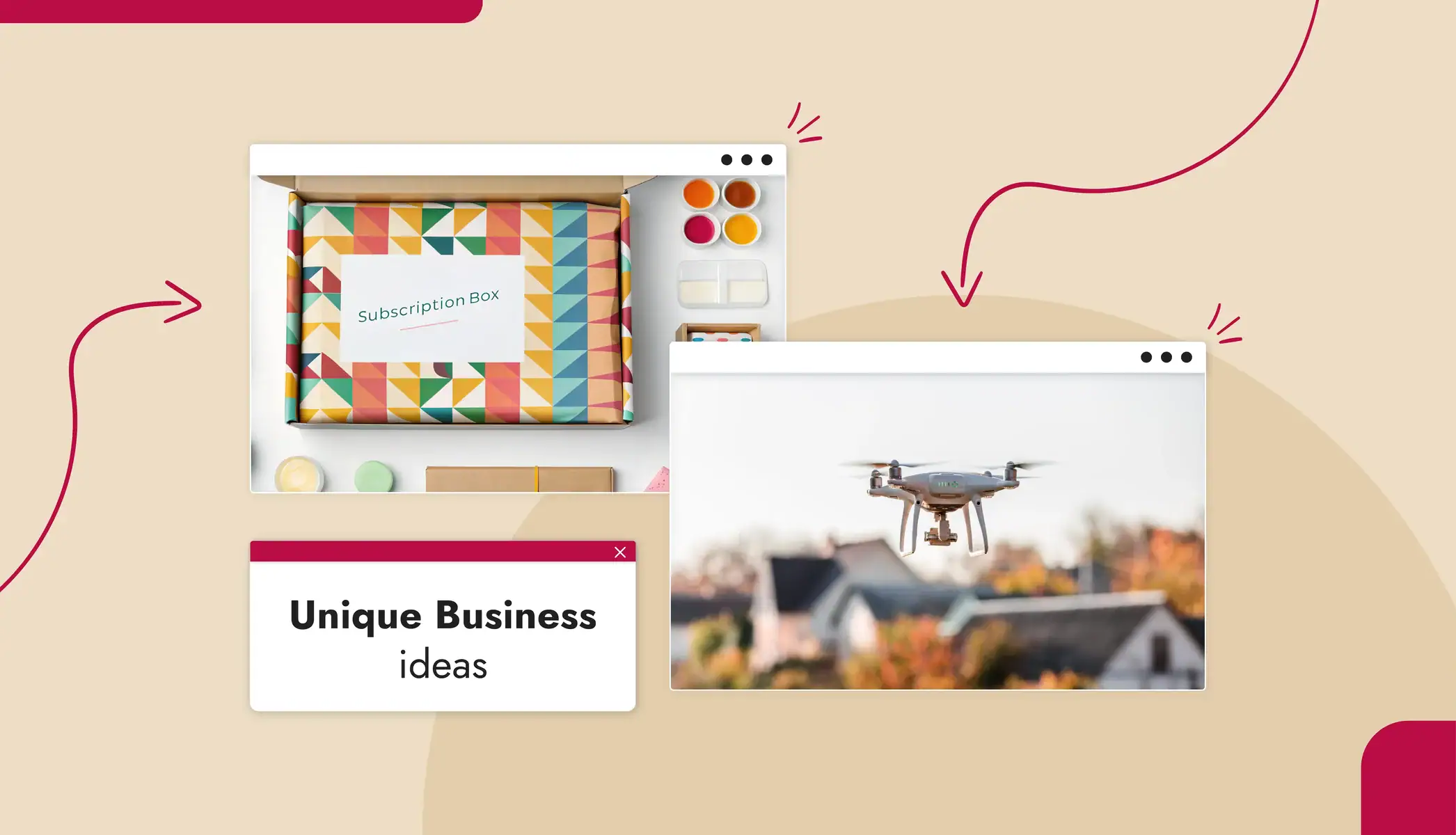
2. Niche subscription box service
Subscription services offer the gift of convenience, with each delivery providing a welcome surprise. Name an interest or a product category, and you’ll almost certainly find a willing audience with a desire for curated items, but, perhaps, limited time or desire to source and ship those products on their own.
In this business model, niche really is key. It’s exactly what makes the subscription box compelling in the first place: each box is stocked with rare or unexpected items that the recipient adores but would not think to purchase on their own.
Boxes could reflect just about any interest or hobby: they might include supplies for urban gardening, vintage-inspired sewing, aquascaping, or even sports fandom. Name an interest and there is almost certainly a way to turn it into a subscription box and build a community around it.
Success demands thoughtful curation but also presents some challenges with sourcing and fulfillment. Diverse inventory must be carefully managed and shipping coordinated so that customers receive boxes on time and continually enjoy the delight of discovering new products.
The category itself is a real growth story: the global subscription box market is on track to reach nearly $50 billion in 2026 and is projected to more than double to over $100 billion by 2030.
3. Virtual assistant for small businesses
Many clients rely on virtual assistants to handle the many day-to-day tasks and obligations that would otherwise add up quickly: scheduling appointments, managing inboxes, scheduling social media posts and preparing invoices, to name a few.
This setup is uniquely appealing because it minimizes upfront costs: the only equipment required is a reliable computer. Add a solid internet connection and virtual assistants can provide much-needed support from anywhere. Many work closely with fellow small business owners, who might otherwise struggle to keep up with administrative tasks.
4. Mobile pet grooming
Pet owners love pampering their canine and feline friends but may feel nervous about washing or grooming pets on their own. They find all the pampering with none of the hassle when they work with dedicated pet groomers. While many entrepreneurs enjoy running their own brick-and-mortar pet salons or grooming studios, these can add considerably to the cost of starting and running a business: they demand dedicated spaces and equipment such as grooming tables or tubs.
Mobile grooming offers a flexible, low‑overhead alternative that brings services directly to a client’s home. Services could include baths, nail trims, ear cleaning, or even tooth brushing. Many clients actively prefer this approach, as it limits commuting on their end and may even reduce stress among anxious pets.
Groomer certifications, although not always required, can improve credibility. Business insurance provides added protection against liability, safeguarding groomers in the event of equipment damage or even pet injuries.
5. Online personal training or wellness coaching
Personal training and wellness coaching help clients improve their strength, stamina, mobility, and mental health, and, while dedicated facilities can be helpful, they are by no means required. Some trainers and coaches meet with clients in their own homes, with many now offering services fully online.
Online trainers and coaches connect over video calls, guiding clients through personalized workouts or even feedback on form in real time. Coaches also provide support beyond these appointments, designing individualized plans that help clients adopt healthy lifestyle habits.
Learning how to start a personal training business is a promising option in 2026 as interest in health and wellness remains strong. Board certification improves credibility — and the very process of getting certified can clue trainers in on industry trends or opportunities worth exploring.
6. Drone photography and videography
When starting a photography business, many talented photographers and videographers capture sweeping footage via unmanned aerial vehicles (UAVs). These shots can meet diverse needs across industries: in real estate, dramatic exterior shots showcase unique property layouts and help buyers understand the size and scale of these spaces. In construction, UAVs enhance site monitoring, while farmers rely on aerial imaging to evaluate crop health and to guide decisions about watering or fertilization.
No matter the industry served, this pathway promises creative fulfillment: photographers and videographers love seeing their visions come to life. There are some caveats, however, including the need for specialized credentials.
FAA Part 107 drone pilot certification is necessary when flying drones for commercial purposes. Securing certification involves studying for and passing a rigorous test. Because it’s a knowledge test, prep should feel manageable. Beyond certification, startup costs or challenges involve advanced equipment and insurance coverage. Familiarity with airspace restrictions and other compliance matters is also crucial.
7. Personalized home decor and custom products
In an era of mass-produced items, there is a clear craving for specialized items that feel deeply personal. Not everyone has the time or skill to create these pieces, but small businesses can use custom designs and handcrafted details to help customers feel special.
The print-on-demand business model is uniquely accessible compared to many eCommerce or retail business options; there’s no need to hold inventory or deal with large production runs. Digitally uploaded designs allow for production as customers place orders. Other creators may opt for laser engravings, which personalize wood or leather items while adding a handcrafted aesthetic.
Marketplaces such as Etsy make it easier to step into this business niche, delivering a ready-made audience that can be further cultivated through social media. Some specialized equipment may be needed if creating engraved or handcrafted items, but the overall startup cost remains quite reasonable.
8. Freelance bookkeeping for solopreneurs
Similar to virtual assisting but with a greater focus on financial organization, a bookkeeping business supports smart money management. This is another wonderful way to run a business that helps other small business owners. Like virtual assisting, it also requires minimal upfront investment, although bookkeepers typically require accounting software or platforms such as QuickBooks or Xero. Basic bookkeeping requires strong accounting skills and attention to detail, but it is not always necessary to become a CPA.
Freelancing gives bookkeepers the freedom to set their own hours and serve as many or as few clients as desired. Recurring demand means there’s always work available: businesses need their books updated regularly as income and expenses are always flowing. Tax season prep further adds to this predictable stream of work.
9. Airbnb and short-term rental turnover cleaning
Short-term rental hosts rely on cleaning services to keep spaces sparkling and hygienic. Today’s demanding guests expect that rentals will rival hotels in terms of cleanliness, so property managers cannot afford any dust or smudges in their spaces. Skilled cleaners get these rentals sparkling with quick, yet thorough services: dusting and wiping surfaces, sanitizing bathrooms, removing trash, and refreshing bedding.
Demand for these services varies but can be quite strong in areas that cater to frequent travelers. Cities with strong tourism or regular events see high guest turnover, which drives consistent demand for prompt cleaning services. Many hosts manage multiple listings and rely on the same cleaners to provide consistent service, week after week.
Startup costs are often modest, although cleaning supplies and disinfectants can add up. The bigger challenge to getting launched may come down to timing: being able to complete cleanings within tight windows so that properties are ready for new guests.
10. Digital product shop
Digital products can be used and enjoyed without requiring physical access. Many products qualify: templates, audio files, online courses, or ebooks. Many products are meant to share advice or provide support, drawing on the entrepreneur’s expertise to build the skills or provide the tools needed to solve unique problems. Here, again, niche selection is critical: successful business owners cater to targeted clients or customers who require targeted support.
Downloaded or delivered through online platforms, these products benefit sellers because they limit the need to store or manage physical inventory. Creators put in the work of crafting products just once, and from there, simply need to manage marketing and customer communication. Steady income remains possible long after products are initially created, making this a uniquely scalable business model.
11. Local errand or task service
Busy community members struggle to find time for everyday essentials. All those grocery store visits and package drop-offs add up, after all, leaving many working professionals feeling as if they have no time available to relax. Errand services tackle small, yet time-consuming responsibilities so that clients can reclaim their precious time.
These businesses excel in dense urban areas but can also find steady demand in many suburban neighborhoods, where clients hope to spend more time with their families. Word of mouth is a must, as this business model is driven by trust. Recommendations from friends and neighbors can yield steady business, including recurring errands. Startup expenses are minimal, although reliable transportation is needed.
12. Niche social media management
Small businesses often need help connecting with followers on Instagram, TikTok, LinkedIn, and other platforms. They look to social media managers for help scheduling posts or responding to messages and may also look to experts to handle analytics so they know which social media strategies work and which fall short.
There’s plenty of room for growth in this field, but landing (and keeping) loyal clients is often easier after establishing a niche. If possible, use personal experience to show how you can connect with a particular market. Maybe you used to lead fitness classes and can still create inspiring wellness content.
Unique business to start with no money
If you have ideas and ambition but limited capital, you’ll need to proceed with care. Small business ownership isn’t out of reach, but it may take some compromises. Simply put, certain business models or industries require upfront investment.
Thankfully, many businesses can be started without costly equipment and even without inventory. Focus on tech-forward, service-based models that allow you to make the most of your existing skill set. Viable options include working as a virtual assistant or selling digital products.
Keep in mind that you may still run into some expenses as you get started: you might need to purchase a business license or pay other filing and administrative fees.
How to choose the right idea for you
As you examine different business ideas or consider how you can make them your own, reflect on these key questions:
- What skills or experience do you already have?
- How much time can you realistically commit?
- Do you need income quickly, or are you building something long-term?
There’s no shame in starting small, especially if you’re interested in a particular field but lack funds for specialized equipment or inventory. Upfront research allows for an easier transition: this means determining local pain points and studying competitors to determine which products or services are most likely to excel. Find a workable idea and test it out; if the results are promising, begin to scale at a pace that feels manageable to you.
What to do once you pick your idea
You’ve landed on a business idea that feels genuinely fresh and exciting. You’re ready to embark on the journey of becoming a small business owner. Follow these steps to turn unique small business ideas into fully operational ventures:
- Choose a business structure. Clarify how you’ll be taxed and how your business will be legally classified: choose a business structure that reflects your goals and priorities. The limited liability company (LLC) offers the perfect balance between flexibility and protection.
- Get an EIN. The nine-digit Employer Identification Number is a must during tax season. Submit your application with the IRS and be mindful of state-based tax IDs.
- Open a business bank account. Avoid mixing personal and business funds, as this could jeopardize liability protection. The best and easiest way to keep funds separated is to open a dedicated, business-specific bank account. Consider also opening a business credit card.
- Set up basic bookkeeping from day one. Streamline taxes and other obligations by getting your paperwork and bookkeeping processes organized. Clean books help you adjust your expenses or pricing strategy to make the most of every dollar. Use cloud-based systems like QuickBooks or consider hiring a dedicated bookkeeper.
- Obtain industry-specific permits or licenses. Determine whether specific licenses are needed to operate in your preferred field. Operating without the necessary local approvals places you at risk of fees or other penalties. Review industry rules along with state-specific requirements.
As your idea begins to take shape, consider seeking extra help with the challenges of business formation. Services such as Tailor Brands can help you begin your entrepreneurial journey on a strong footing. Setup tools address common concerns such as obtaining an EIN or registering your LLC. These services are useful for first-time founders, freeing up more time and mental stamina to focus on other business priorities.
Conclusion
The best unique business ideas for 2026 draw on personal passion and expertise to help community members and fellow entrepreneurs thrive. Digital solutions provide a clear advantage that prevented many promising entrepreneurs from opening businesses in the past: the chance to get started without major upfront investments.
Market research and a compelling niche can improve early business outcomes, as can support with the initial challenges of business formation or bookkeeping. In today’s small business world, action outweighs perfection, so don’t be afraid to start small and test unique business ideas; you just might land on a profitable business model that makes your entrepreneurial dreams come true.